Collaboration Expands Capacity for Proton Therapy Clinical Research and Patient Treatments
|
By MedImaging International staff writers Posted on 14 Apr 2014 |


|
Varian Medical Systems (Palo Alto, CA, USA) and the Paul Scherrer Institute (PSI; Villigen PSI, Switzerland) are extending an existing collaboration in the field of proton therapy to offer patients more accurate cancer treatments using intensity-modulated proton therapy (IMPT).
Under the agreement, Varian will also supply technology and equipment to help meet a growing need for clinical research and treatments at PSI.
Proton therapy targets tumors with concentrated doses of radiation while providing excellent protection of neighboring healthy tissue. IMPT, which was pioneered using pencil-beam scanning at the Paul Scherrer Institute and made commercially available by Varian Medical Systems, is a radiation delivery technique that enables clinicians to optimize precision when treating tumors.
“This multi-year R&D collaboration will enable Varian and PSI to continue their productive research activities in the areas of advanced pencil beam scanning delivery systems, on-board imaging, clinical workflow optimization, and accelerator technology to further develop proton treatment technology over the coming years,” said Moataz Karmalawy, head of Varian’s particle therapy group. “Our original collaboration led to the commercialization of IMPT and we are delighted to expand our partnership to develop more revolutionary technologies.”
“Over the past 10 years we have developed scanning techniques for the treatment of tumors with intensity-modulated proton therapy,” added Prof. Dr. Joel Mesot, director of the Paul Scherrer Institute. “We are looking forward to the new collaboration as it will help us to develop more tools for treating more patients with even greater precision while making our technology more widely available to the clinical and scientific community.”
The value of the equipment portion of the contract is approximately USD 10 million and it will be booked in the second quarter of fiscal 2014. CE marking and international registrations are pending for ProBeam, and it is not available for sale in all markets.
Varian’s scanning beam IMPT technology is already being used at the Scripps Proton Therapy Center (San Diego, CA, USA), and the Rinecker Proton Therapy Center (Munich, Germany). Varian also has contracts to install ProBeam systems at six additional sites in Saudi Arabia, the United States, and Russia.
Varian Medical Systems is a leading developer of medical devices and software for treating cancer and other medical conditions with radiotherapy, radiosurgery, and brachytherapy. The company supplies informatics software for managing comprehensive cancer clinics, radiotherapy centers and medical oncology firms.
PSI operates the first compact scanning gantry worldwide for proton radiation therapy of deep-seated tumors. The spot-scanning technology developed at PSI enables malignant tumors to be targeted with high precision deep inside in the body without damaging healthy tissue around the target area. By end of 2011, the PSI compact Gantry 1 had been used to treat nearly 1,000 patients suffering from skull-base, brain, or spinal cord tumors as well as abdominal sarcomas. Among the patients were more than 350 children and young people under the age of 20.
Related Links:
Varian Medical Systems
Paul Scherrer Institute






Under the agreement, Varian will also supply technology and equipment to help meet a growing need for clinical research and treatments at PSI.
Proton therapy targets tumors with concentrated doses of radiation while providing excellent protection of neighboring healthy tissue. IMPT, which was pioneered using pencil-beam scanning at the Paul Scherrer Institute and made commercially available by Varian Medical Systems, is a radiation delivery technique that enables clinicians to optimize precision when treating tumors.
“This multi-year R&D collaboration will enable Varian and PSI to continue their productive research activities in the areas of advanced pencil beam scanning delivery systems, on-board imaging, clinical workflow optimization, and accelerator technology to further develop proton treatment technology over the coming years,” said Moataz Karmalawy, head of Varian’s particle therapy group. “Our original collaboration led to the commercialization of IMPT and we are delighted to expand our partnership to develop more revolutionary technologies.”
“Over the past 10 years we have developed scanning techniques for the treatment of tumors with intensity-modulated proton therapy,” added Prof. Dr. Joel Mesot, director of the Paul Scherrer Institute. “We are looking forward to the new collaboration as it will help us to develop more tools for treating more patients with even greater precision while making our technology more widely available to the clinical and scientific community.”
The value of the equipment portion of the contract is approximately USD 10 million and it will be booked in the second quarter of fiscal 2014. CE marking and international registrations are pending for ProBeam, and it is not available for sale in all markets.
Varian’s scanning beam IMPT technology is already being used at the Scripps Proton Therapy Center (San Diego, CA, USA), and the Rinecker Proton Therapy Center (Munich, Germany). Varian also has contracts to install ProBeam systems at six additional sites in Saudi Arabia, the United States, and Russia.
Varian Medical Systems is a leading developer of medical devices and software for treating cancer and other medical conditions with radiotherapy, radiosurgery, and brachytherapy. The company supplies informatics software for managing comprehensive cancer clinics, radiotherapy centers and medical oncology firms.
PSI operates the first compact scanning gantry worldwide for proton radiation therapy of deep-seated tumors. The spot-scanning technology developed at PSI enables malignant tumors to be targeted with high precision deep inside in the body without damaging healthy tissue around the target area. By end of 2011, the PSI compact Gantry 1 had been used to treat nearly 1,000 patients suffering from skull-base, brain, or spinal cord tumors as well as abdominal sarcomas. Among the patients were more than 350 children and young people under the age of 20.
Related Links:
Varian Medical Systems
Paul Scherrer Institute

Breast Localization System
MAMMOREP LOOP
Medical Radiographic X-Ray Machine
TR30N HF
Ultrasound Needle Guidance System
SonoSite L25
Digital Color Doppler Ultrasound System
MS22Plus
Latest Nuclear Medicine News
- PET Imaging of Inflammation Predicts Recovery and Guides Therapy After Heart Attack
- Radiotheranostic Approach Detects, Kills and Reprograms Aggressive Cancers
- New Imaging Solution Improves Survival for Patients with Recurring Prostate Cancer
- PET Tracer Enables Same-Day Imaging of Triple-Negative Breast and Urothelial Cancers
- New Camera Sees Inside Human Body for Enhanced Scanning and Diagnosis
- Novel Bacteria-Specific PET Imaging Approach Detects Hard-To-Diagnose Lung Infections
- New Imaging Approach Could Reduce Need for Biopsies to Monitor Prostate Cancer
- Novel Radiolabeled Antibody Improves Diagnosis and Treatment of Solid Tumors
- Novel PET Imaging Approach Offers Never-Before-Seen View of Neuroinflammation
- Novel Radiotracer Identifies Biomarker for Triple-Negative Breast Cancer
- Innovative PET Imaging Technique to Help Diagnose Neurodegeneration
- New Molecular Imaging Test to Improve Lung Cancer Diagnosis
- Novel PET Technique Visualizes Spinal Cord Injuries to Predict Recovery
- Next-Gen Tau Radiotracers Outperform FDA-Approved Imaging Agents in Detecting Alzheimer’s
- Breakthrough Method Detects Inflammation in Body Using PET Imaging
- Advanced Imaging Reveals Hidden Metastases in High-Risk Prostate Cancer Patients
Channels
Radiography
view channel
X-Ray Breakthrough Captures Three Image-Contrast Types in Single Shot
Detecting early-stage cancer or subtle changes deep inside tissues has long challenged conventional X-ray systems, which rely only on how structures absorb radiation. This limitation keeps many microstructural... Read more
AI Generates Future Knee X-Rays to Predict Osteoarthritis Progression Risk
Osteoarthritis, a degenerative joint disease affecting over 500 million people worldwide, is the leading cause of disability among older adults. Current diagnostic tools allow doctors to assess damage... Read more
MRI
view channel
Novel Imaging Approach to Improve Treatment for Spinal Cord Injuries
Vascular dysfunction in the spinal cord contributes to multiple neurological conditions, including traumatic injuries and degenerative cervical myelopathy, where reduced blood flow can lead to progressive... Read more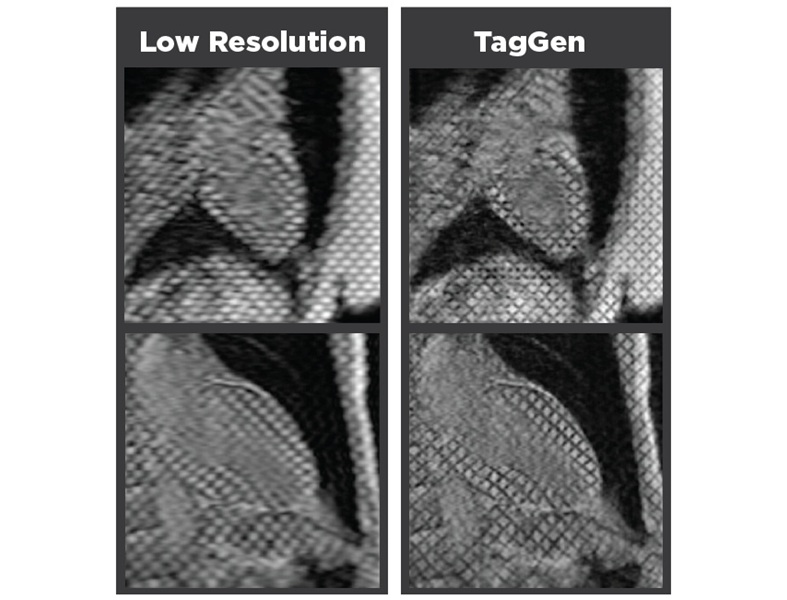
AI-Assisted Model Enhances MRI Heart Scans
A cardiac MRI can reveal critical information about the heart’s function and any abnormalities, but traditional scans take 30 to 90 minutes and often suffer from poor image quality due to patient movement.... Read more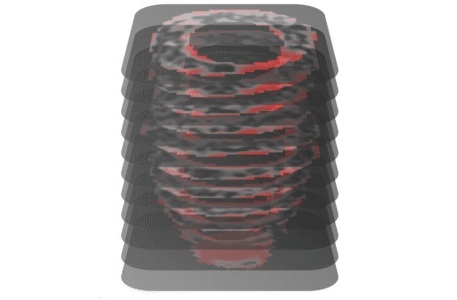
AI Model Outperforms Doctors at Identifying Patients Most At-Risk of Cardiac Arrest
Hypertrophic cardiomyopathy is one of the most common inherited heart conditions and a leading cause of sudden cardiac death in young individuals and athletes. While many patients live normal lives, some... Read more
Ultrasound
view channel
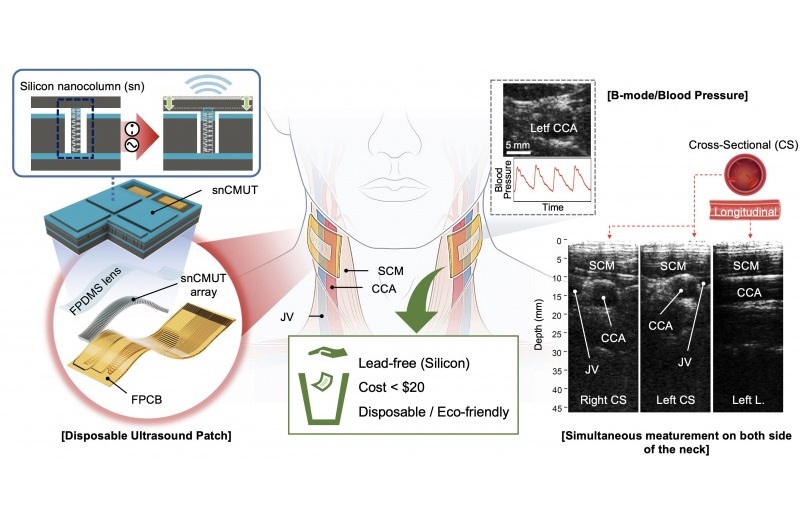
Wearable Ultrasound Imaging System to Enable Real-Time Disease Monitoring
Chronic conditions such as hypertension and heart failure require close monitoring, yet today’s ultrasound imaging is largely confined to hospitals and short, episodic scans. This reactive model limits... Read more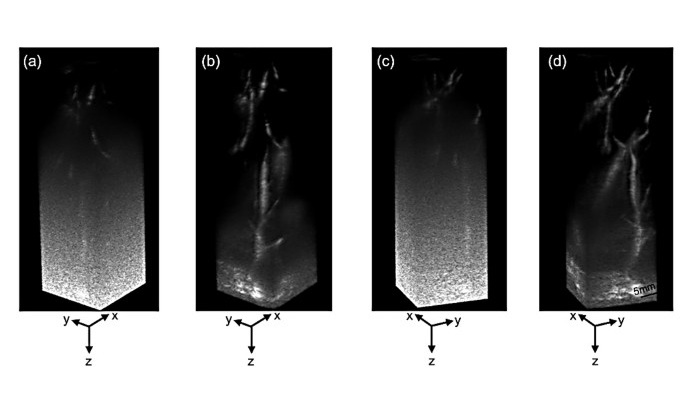
Ultrasound Technique Visualizes Deep Blood Vessels in 3D Without Contrast Agents
Producing clear 3D images of deep blood vessels has long been difficult without relying on contrast agents, CT scans, or MRI. Standard ultrasound typically provides only 2D cross-sections, limiting clinicians’... Read more
Nuclear Medicine
view channel
PET Imaging of Inflammation Predicts Recovery and Guides Therapy After Heart Attack
Acute myocardial infarction can trigger lasting heart damage, yet clinicians still lack reliable tools to identify which patients will regain function and which may develop heart failure.... Read more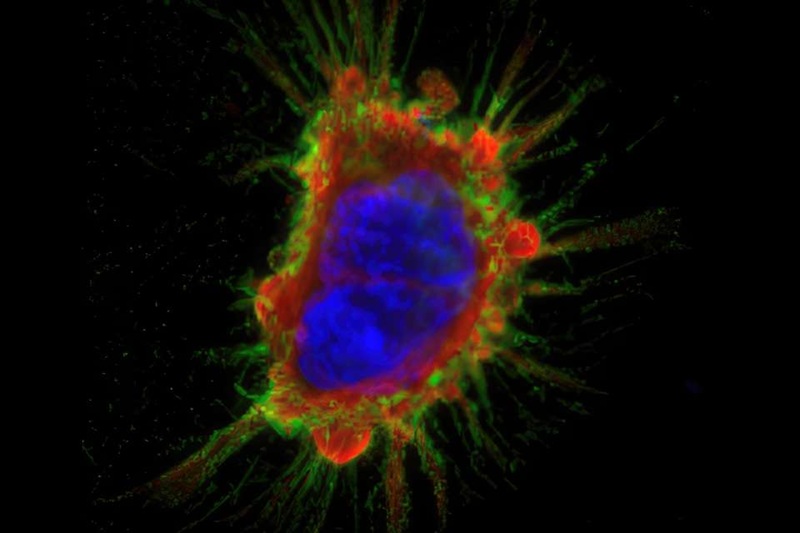
Radiotheranostic Approach Detects, Kills and Reprograms Aggressive Cancers
Aggressive cancers such as osteosarcoma and glioblastoma often resist standard therapies, thrive in hostile tumor environments, and recur despite surgery, radiation, or chemotherapy. These tumors also... Read more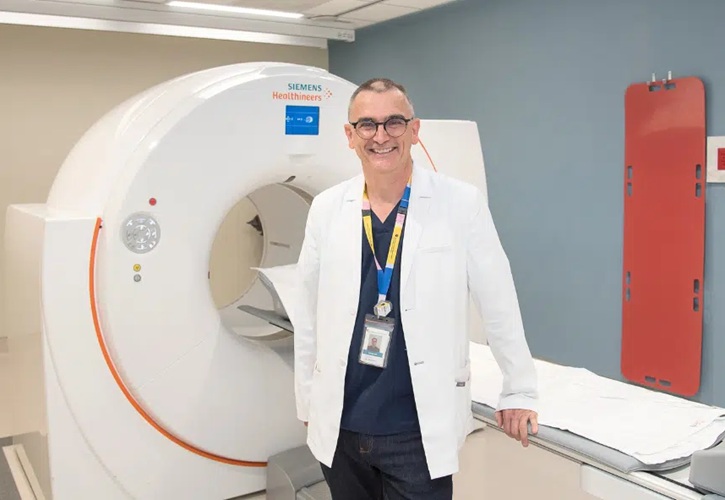
New Imaging Solution Improves Survival for Patients with Recurring Prostate Cancer
Detecting recurrent prostate cancer remains one of the most difficult challenges in oncology, as standard imaging methods such as bone scans and CT scans often fail to accurately locate small or early-stage tumors.... Read more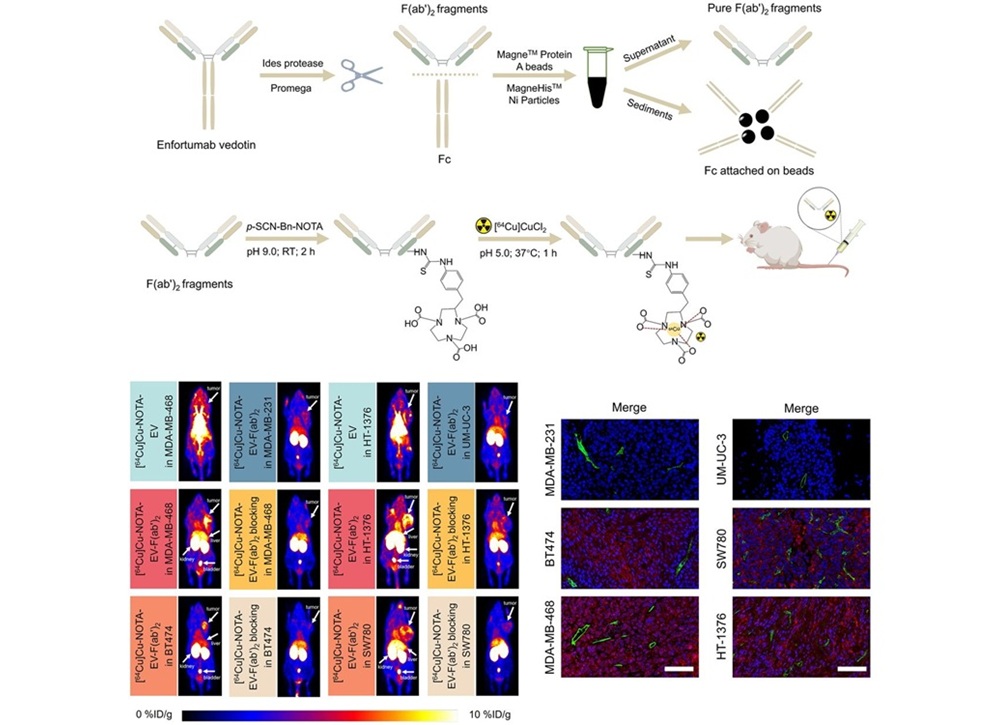
General/Advanced Imaging
view channel
3D Scanning Approach Enables Ultra-Precise Brain Surgery
Precise navigation is critical in neurosurgery, yet even small alignment errors can affect outcomes when operating deep within the brain. A new 3D surface-scanning approach now provides a radiation-free... Read more
AI Tool Improves Medical Imaging Process by 90%
Accurately labeling different regions within medical scans, a process known as medical image segmentation, is critical for diagnosis, surgery planning, and research. Traditionally, this has been a manual... Read more
New Ultrasmall, Light-Sensitive Nanoparticles Could Serve as Contrast Agents
Medical imaging technologies face ongoing challenges in capturing accurate, detailed views of internal processes, especially in conditions like cancer, where tracking disease development and treatment... Read more
AI Algorithm Accurately Predicts Pancreatic Cancer Metastasis Using Routine CT Images
In pancreatic cancer, detecting whether the disease has spread to other organs is critical for determining whether surgery is appropriate. If metastasis is present, surgery is not recommended, yet current... Read moreImaging IT
view channel
New Google Cloud Medical Imaging Suite Makes Imaging Healthcare Data More Accessible
Medical imaging is a critical tool used to diagnose patients, and there are billions of medical images scanned globally each year. Imaging data accounts for about 90% of all healthcare data1 and, until... Read more