


Molecular Imaging Can Identify Biomarker Linked with Alzheimer's Disease
|
By MedImaging International staff writers Posted on 15 Feb 2011 |


|
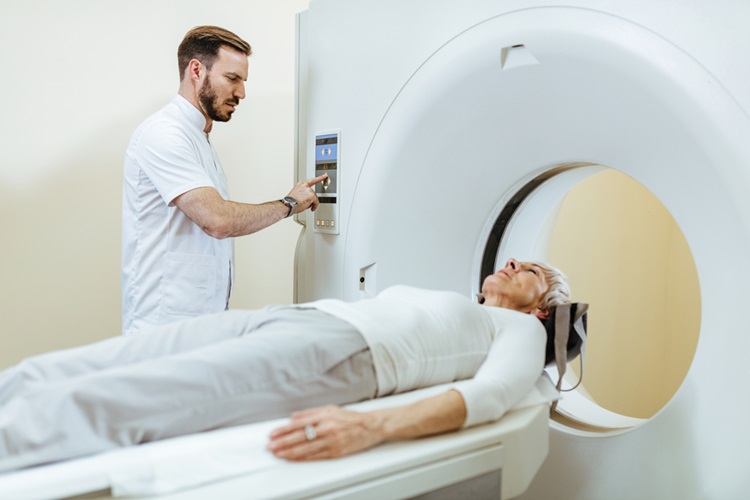
Preliminary research suggests that use of a type of molecular imaging procedure may have the ability to detect the presence of beta-amyloid in the brains of individuals during life, a biomarker that is identified during autopsy to confirm a diagnosis of Alzheimer disease (AD).
The findings were published in the January 19, 2011, issue of the Journal of the American Medical Association (JAMA). "Both diagnosis and treatment of Alzheimer disease are hampered by the lack of noninvasive biomarkers of the underlying pathology. Between 10% and 20% of patients clinically diagnosed with AD lack AD pathology at autopsy, and community physicians may not diagnose AD in 33% of patients with mild signs and symptoms,” according to background information in the article. "The ability to identify and quantify brain beta-amyloid could increase the accuracy of a clinical diagnosis of Alzheimer disease.” Several types of positron emission tomographic [PET] imaging tests are under study, with florbetapir F18 (a diagnostic chemical that binds with beta-amyloid) PET showing promise. "However, the definitive relationship between the florbetapir-PET image and beta-amyloid deposition has not been established.”
Christopher M. Clark, MD, of Avid Radiopharmaceuticals (Philadelphia, PA, USA), and colleagues conducted a study to determine if florbetapir F18 PET imaging performed during life accurately predicts the presence of beta-amyloid in the brain at autopsy. Florbetapir-PET imaging was performed on 35 patients from hospice, long-term care, and community healthcare facilities near the end of their lives (six patients to establish the protocol and 29 to validate), which was compared with measures of brain beta-amyloid that was determined by autopsy after their death. PET images were also obtained in 74 young individuals (18-50 years) presumed free of brain amyloid to better understand the frequency of a false-positive interpretation of a florbetapir-PET image.
Florbetapir-PET imaging was performed an average of 99 days before death for the 29 individuals in the primary analysis group. Fifteen of the 29 individuals (51.7%) met pathological criteria for AD. Analysis of images and other data indicated a correlation between florbetapir-PET images and presence and quantity of beta-amyloid pathology at autopsy. "Florbetapir-PET images and postmortem results rated as positive or negative for beta-amyloid agreed in 96% of the 29 individuals in the primary analysis cohort. The florbetapir-PET image was rated as amyloid-negative in the 74 younger individuals in the nonautopsy cohort,” the researchers wrote in their article
The investigators added that while amyloid pathology is a fundamental element for an AD diagnosis, "clinically impaired function may depend, in part, on the ability of the individual's brain to tolerate aggregated amyloid. Genetic risk factors, lifestyle choices, environmental factors, and neuropathological comorbidities may alter the threshold for the onset of cognitive impairment associated with beta-amyloid aggregation.”
The authors concluded, "This prospective imaging to autopsy study provides evidence that a molecular imaging procedure can identify beta-amyloid pathology in the brains of individuals during life. Understanding the appropriate use of florbetapir-PET imaging in the clinical diagnosis of AD or in the prediction of progression to dementia will require additional studies,” the authors concluded.
Related Links:
Avid Radiopharmaceuticals




 Guided Devices.jpg)


The findings were published in the January 19, 2011, issue of the Journal of the American Medical Association (JAMA). "Both diagnosis and treatment of Alzheimer disease are hampered by the lack of noninvasive biomarkers of the underlying pathology. Between 10% and 20% of patients clinically diagnosed with AD lack AD pathology at autopsy, and community physicians may not diagnose AD in 33% of patients with mild signs and symptoms,” according to background information in the article. "The ability to identify and quantify brain beta-amyloid could increase the accuracy of a clinical diagnosis of Alzheimer disease.” Several types of positron emission tomographic [PET] imaging tests are under study, with florbetapir F18 (a diagnostic chemical that binds with beta-amyloid) PET showing promise. "However, the definitive relationship between the florbetapir-PET image and beta-amyloid deposition has not been established.”
Christopher M. Clark, MD, of Avid Radiopharmaceuticals (Philadelphia, PA, USA), and colleagues conducted a study to determine if florbetapir F18 PET imaging performed during life accurately predicts the presence of beta-amyloid in the brain at autopsy. Florbetapir-PET imaging was performed on 35 patients from hospice, long-term care, and community healthcare facilities near the end of their lives (six patients to establish the protocol and 29 to validate), which was compared with measures of brain beta-amyloid that was determined by autopsy after their death. PET images were also obtained in 74 young individuals (18-50 years) presumed free of brain amyloid to better understand the frequency of a false-positive interpretation of a florbetapir-PET image.
Florbetapir-PET imaging was performed an average of 99 days before death for the 29 individuals in the primary analysis group. Fifteen of the 29 individuals (51.7%) met pathological criteria for AD. Analysis of images and other data indicated a correlation between florbetapir-PET images and presence and quantity of beta-amyloid pathology at autopsy. "Florbetapir-PET images and postmortem results rated as positive or negative for beta-amyloid agreed in 96% of the 29 individuals in the primary analysis cohort. The florbetapir-PET image was rated as amyloid-negative in the 74 younger individuals in the nonautopsy cohort,” the researchers wrote in their article
The investigators added that while amyloid pathology is a fundamental element for an AD diagnosis, "clinically impaired function may depend, in part, on the ability of the individual's brain to tolerate aggregated amyloid. Genetic risk factors, lifestyle choices, environmental factors, and neuropathological comorbidities may alter the threshold for the onset of cognitive impairment associated with beta-amyloid aggregation.”
The authors concluded, "This prospective imaging to autopsy study provides evidence that a molecular imaging procedure can identify beta-amyloid pathology in the brains of individuals during life. Understanding the appropriate use of florbetapir-PET imaging in the clinical diagnosis of AD or in the prediction of progression to dementia will require additional studies,” the authors concluded.
Related Links:
Avid Radiopharmaceuticals

Multi-Use Ultrasound Table
Clinton
Half Apron
Demi
Ultrasound-Guided Biopsy & Visualization Tools
Endoscopic Ultrasound (EUS) Guided Devices
Portable X-ray Unit
AJEX140H
Latest Nuclear Medicine News
- PET Imaging of Inflammation Predicts Recovery and Guides Therapy After Heart Attack
- Radiotheranostic Approach Detects, Kills and Reprograms Aggressive Cancers
- New Imaging Solution Improves Survival for Patients with Recurring Prostate Cancer
- PET Tracer Enables Same-Day Imaging of Triple-Negative Breast and Urothelial Cancers
- New Camera Sees Inside Human Body for Enhanced Scanning and Diagnosis
- Novel Bacteria-Specific PET Imaging Approach Detects Hard-To-Diagnose Lung Infections
- New Imaging Approach Could Reduce Need for Biopsies to Monitor Prostate Cancer
- Novel Radiolabeled Antibody Improves Diagnosis and Treatment of Solid Tumors
- Novel PET Imaging Approach Offers Never-Before-Seen View of Neuroinflammation
- Novel Radiotracer Identifies Biomarker for Triple-Negative Breast Cancer
- Innovative PET Imaging Technique to Help Diagnose Neurodegeneration
- New Molecular Imaging Test to Improve Lung Cancer Diagnosis
- Novel PET Technique Visualizes Spinal Cord Injuries to Predict Recovery
- Next-Gen Tau Radiotracers Outperform FDA-Approved Imaging Agents in Detecting Alzheimer’s
- Breakthrough Method Detects Inflammation in Body Using PET Imaging
- Advanced Imaging Reveals Hidden Metastases in High-Risk Prostate Cancer Patients
Channels
Radiography
view channel
X-Ray Breakthrough Captures Three Image-Contrast Types in Single Shot
Detecting early-stage cancer or subtle changes deep inside tissues has long challenged conventional X-ray systems, which rely only on how structures absorb radiation. This limitation keeps many microstructural... Read more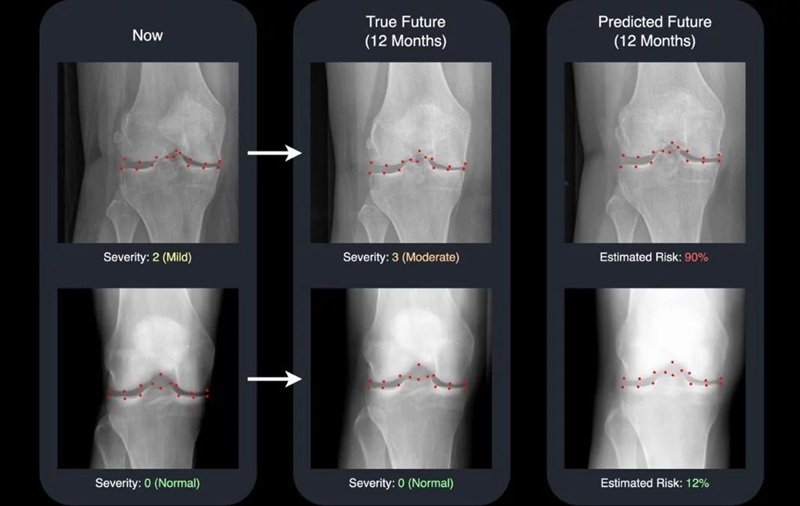
AI Generates Future Knee X-Rays to Predict Osteoarthritis Progression Risk
Osteoarthritis, a degenerative joint disease affecting over 500 million people worldwide, is the leading cause of disability among older adults. Current diagnostic tools allow doctors to assess damage... Read more
MRI
view channel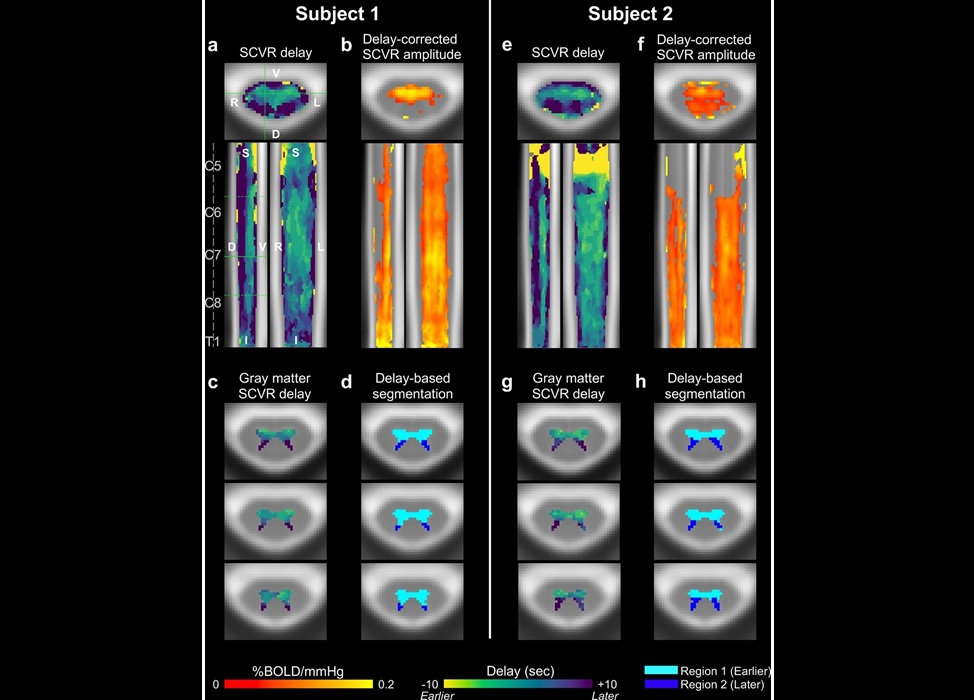
Novel Imaging Approach to Improve Treatment for Spinal Cord Injuries
Vascular dysfunction in the spinal cord contributes to multiple neurological conditions, including traumatic injuries and degenerative cervical myelopathy, where reduced blood flow can lead to progressive... Read more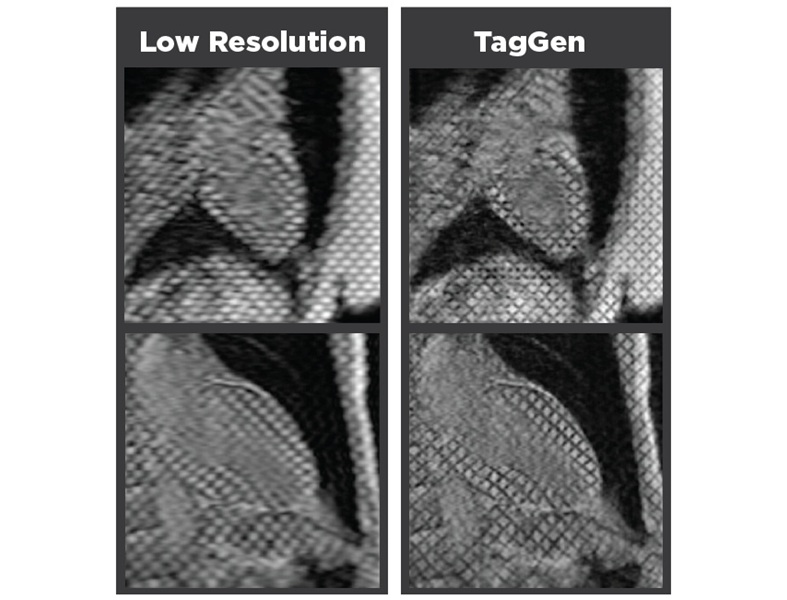
AI-Assisted Model Enhances MRI Heart Scans
A cardiac MRI can reveal critical information about the heart’s function and any abnormalities, but traditional scans take 30 to 90 minutes and often suffer from poor image quality due to patient movement.... Read more
AI Model Outperforms Doctors at Identifying Patients Most At-Risk of Cardiac Arrest
Hypertrophic cardiomyopathy is one of the most common inherited heart conditions and a leading cause of sudden cardiac death in young individuals and athletes. While many patients live normal lives, some... Read more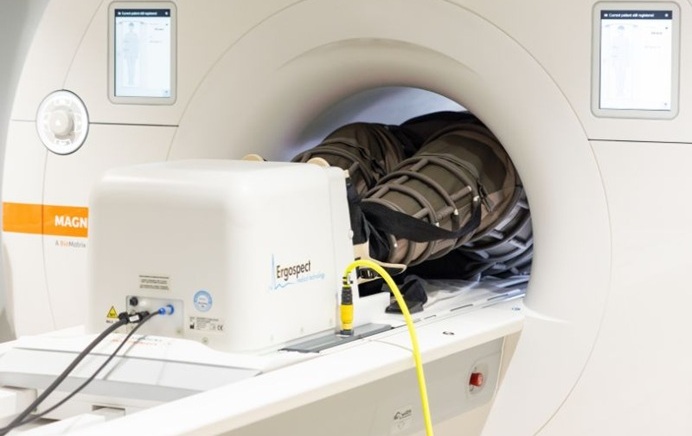
Ultrasound
view channel
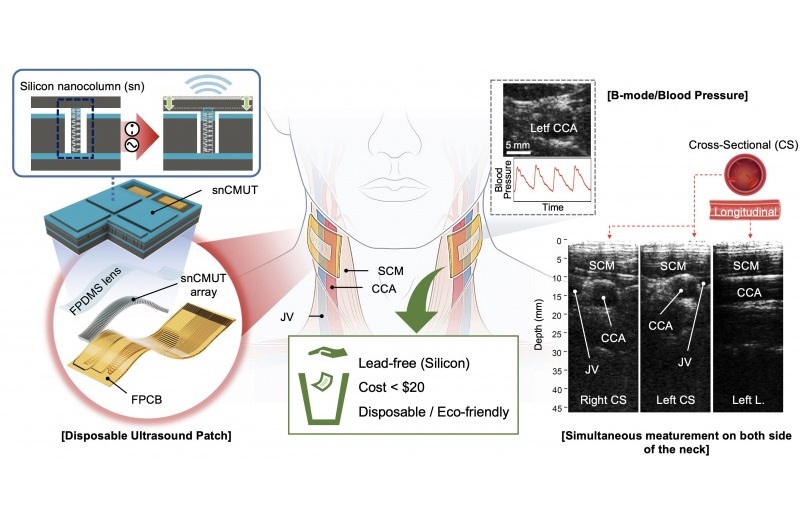
Wearable Ultrasound Imaging System to Enable Real-Time Disease Monitoring
Chronic conditions such as hypertension and heart failure require close monitoring, yet today’s ultrasound imaging is largely confined to hospitals and short, episodic scans. This reactive model limits... Read more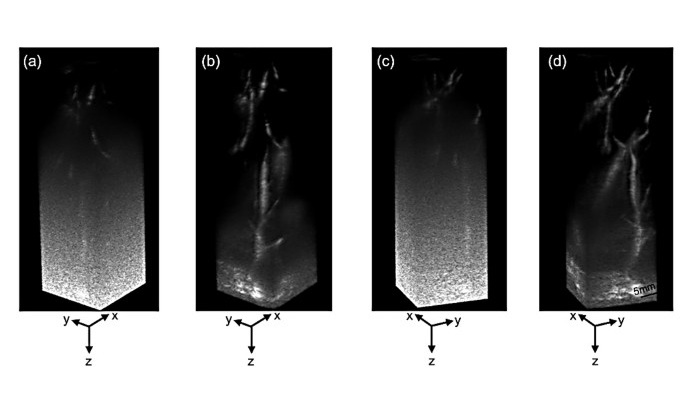
Ultrasound Technique Visualizes Deep Blood Vessels in 3D Without Contrast Agents
Producing clear 3D images of deep blood vessels has long been difficult without relying on contrast agents, CT scans, or MRI. Standard ultrasound typically provides only 2D cross-sections, limiting clinicians’... Read more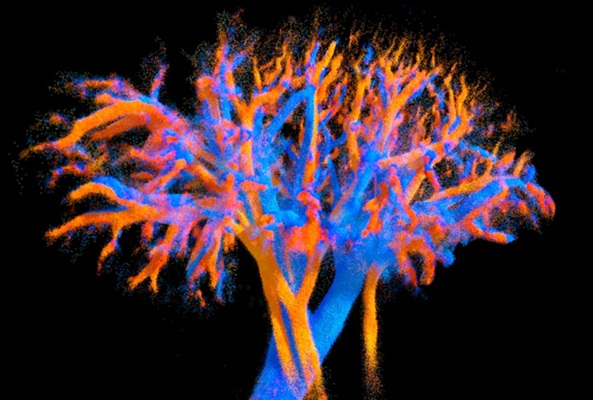
General/Advanced Imaging
view channel
3D Scanning Approach Enables Ultra-Precise Brain Surgery
Precise navigation is critical in neurosurgery, yet even small alignment errors can affect outcomes when operating deep within the brain. A new 3D surface-scanning approach now provides a radiation-free... Read more
AI Tool Improves Medical Imaging Process by 90%
Accurately labeling different regions within medical scans, a process known as medical image segmentation, is critical for diagnosis, surgery planning, and research. Traditionally, this has been a manual... Read more
New Ultrasmall, Light-Sensitive Nanoparticles Could Serve as Contrast Agents
Medical imaging technologies face ongoing challenges in capturing accurate, detailed views of internal processes, especially in conditions like cancer, where tracking disease development and treatment... Read more
AI Algorithm Accurately Predicts Pancreatic Cancer Metastasis Using Routine CT Images
In pancreatic cancer, detecting whether the disease has spread to other organs is critical for determining whether surgery is appropriate. If metastasis is present, surgery is not recommended, yet current... Read moreImaging IT
view channel
New Google Cloud Medical Imaging Suite Makes Imaging Healthcare Data More Accessible
Medical imaging is a critical tool used to diagnose patients, and there are billions of medical images scanned globally each year. Imaging data accounts for about 90% of all healthcare data1 and, until... Read more
Global AI in Medical Diagnostics Market to Be Driven by Demand for Image Recognition in Radiology
The global artificial intelligence (AI) in medical diagnostics market is expanding with early disease detection being one of its key applications and image recognition becoming a compelling consumer proposition... Read more
Industry News
view channel
GE HealthCare and NVIDIA Collaboration to Reimagine Diagnostic Imaging
GE HealthCare (Chicago, IL, USA) has entered into a collaboration with NVIDIA (Santa Clara, CA, USA), expanding the existing relationship between the two companies to focus on pioneering innovation in... Read more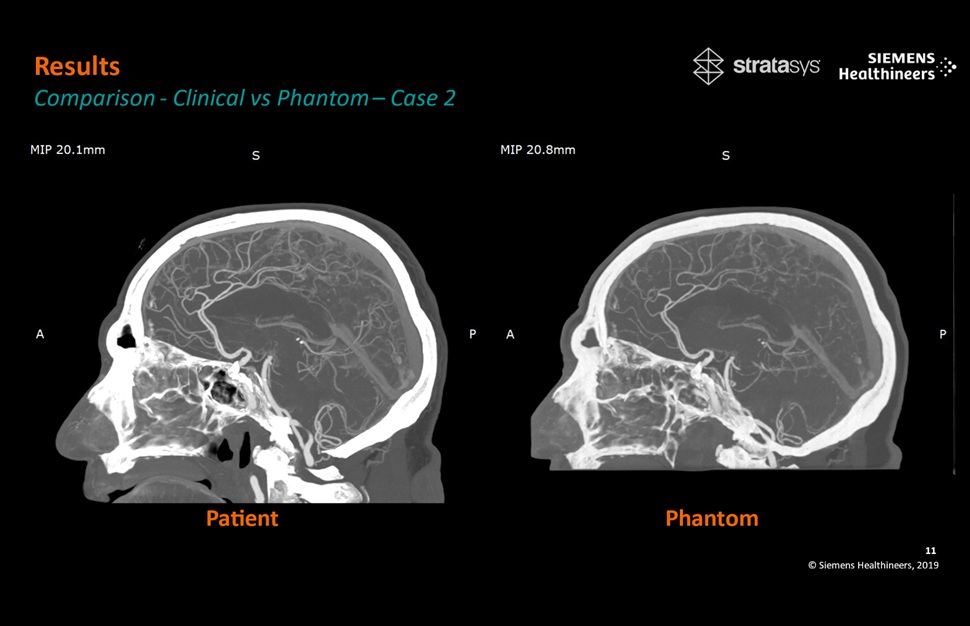
Patient-Specific 3D-Printed Phantoms Transform CT Imaging
New research has highlighted how anatomically precise, patient-specific 3D-printed phantoms are proving to be scalable, cost-effective, and efficient tools in the development of new CT scan algorithms... Read more
Siemens and Sectra Collaborate on Enhancing Radiology Workflows
Siemens Healthineers (Forchheim, Germany) and Sectra (Linköping, Sweden) have entered into a collaboration aimed at enhancing radiologists' diagnostic capabilities and, in turn, improving patient care... Read more