Clinical Trials Network Expands Phantom Program for Evaluating Imaging Centers
|
By MedImaging International staff writers Posted on 12 May 2009 |


|
A prototype chest simulator is the first control implemented to ensure consistency across multiple imaging sites.
The SNM Clinical Trials Network (Reston, VA, USA) has reported that a prototype clinical positron emission tomography (PET) oncology imaging simulator--or "phantom"--has been successfully scanned and imaged at four imaging centers. SNM intends to deliver and scan the phantom at an additional 20 imaging centers by the end of September.
SNM's Clinical Trials Network--as part of its mission to ensure standardization and harmonization across multiple imaging sites participating in clinical trials--evaluates images produced by phantoms to ensure that molecular imaging centers are providing consistent and accurate images. Imaging consistency among sites--both in the technology used and images produced--is vital for ensuring quality imaging and quantitative data and is essential to meet U.S. Food and Drug Administration (FDA) requirements for investigational clinical trials.
"The community agrees that a lack of uniformity across imaging sites is a primary barrier to using imaging in clinical trials to facilitate drug development," said Michael Graham, Ph.D., M.D., cochair of SNM's Clinical Trials Network, and director of nuclear medicine at the University of Iowa Carver College of Medicine (Iowa City, USA). "When pharmaceutical companies apply to FDA for approval of a new product, they must first demonstrate a certain level of disease detectability as evidenced by some imaging measurement. Many of the denials of new drugs are based on a rejection of data compiled from poor-quality images or images that don't appear to match those from another similar study."
Effectively scanning phantoms is one part of the overall process that the network will use to "validate" imaging sites for future clinical trials. Imaging of the PET phantoms, which contain a known quantity and distribution of radioactivity, will be used to evaluate each site's imaging capabilities both qualitatively and quantitatively and ensure standardization and compliance with defined protocols in order to ensure consistency across multiple centers in a single trial.
"The network's phantom program draws upon an SNM phantom imaging program that has been operational for over 10 years. In addition, SNM maintains a group of experts who evaluate a center's image quality," said Paul E. Christian, chair of the Clinical Trials Network's Phantom Subcommittee and associate director of molecular imaging at the Huntsman Cancer Institute, University of Utah (Salt Lake City, USA). "Based on these phantom images, experts can help imaging centers by recommending adjustments in the image acquisition parameters to produce images of a very high quality."
The first phantom in use is the oncology phantom (designed primarily to support investigational oncology clinical trials), which was scanned at each of four test sites--the University of Utah, University of Iowa, University of Pennsylvania (Philadelphia, PA, USA), and Mayo Clinic (Rochester, MN, USA)--using a standard imaging protocol. To test the resolution of the imaging equipment at each site, the phantom contained multiple simulated tumors of different sizes. Physicians at each of the four sites were able to evaluate the images and identify all the tumors.
Based on this initial success with the oncology phantom, the network is expanding its phantom imaging program by providing other phantoms to qualified sites in the network's registry. In this regard, a cardiac phantom is beginning testing at the four initial sites, and a brain phantom prototype is being developed and is anticipated to be available by June 2009 to assist a pharmaceutical company with site imaging evaluation for an upcoming phase-3 clinical trial. These three phantoms will be on display at the MI Gateway in the exhibit hall during SNM's 56th annual meeting, June 13-17, 2009, in Toronto, Canada.
The SNM Clinical Trials Network has registered more than 200 imaging sites worldwide, with the goal of validating every site that has registered. As part of the registry, each validated site will undergo periodic retesting to ensure the continuing quality of performance.
SNM (formerly the Society of Nuclear Medicine) is an international scientific and medical organization dedicated to raising public awareness about what molecular imaging is and how it can help provide patients with the best health care possible. SNM members specialize in molecular imaging, a vital element of today's medical practice that adds an additional dimension to diagnosis, changing the way common and devastating diseases are understood and treated. SNM's more than 17,000 members set the standard for molecular imaging and nuclear medicine practice by creating guidelines, sharing information through journals and meetings, and leading advocacy on key issues that affect molecular imaging and therapy research and practice.
Related Links:
SNM





The SNM Clinical Trials Network (Reston, VA, USA) has reported that a prototype clinical positron emission tomography (PET) oncology imaging simulator--or "phantom"--has been successfully scanned and imaged at four imaging centers. SNM intends to deliver and scan the phantom at an additional 20 imaging centers by the end of September.
SNM's Clinical Trials Network--as part of its mission to ensure standardization and harmonization across multiple imaging sites participating in clinical trials--evaluates images produced by phantoms to ensure that molecular imaging centers are providing consistent and accurate images. Imaging consistency among sites--both in the technology used and images produced--is vital for ensuring quality imaging and quantitative data and is essential to meet U.S. Food and Drug Administration (FDA) requirements for investigational clinical trials.
"The community agrees that a lack of uniformity across imaging sites is a primary barrier to using imaging in clinical trials to facilitate drug development," said Michael Graham, Ph.D., M.D., cochair of SNM's Clinical Trials Network, and director of nuclear medicine at the University of Iowa Carver College of Medicine (Iowa City, USA). "When pharmaceutical companies apply to FDA for approval of a new product, they must first demonstrate a certain level of disease detectability as evidenced by some imaging measurement. Many of the denials of new drugs are based on a rejection of data compiled from poor-quality images or images that don't appear to match those from another similar study."
Effectively scanning phantoms is one part of the overall process that the network will use to "validate" imaging sites for future clinical trials. Imaging of the PET phantoms, which contain a known quantity and distribution of radioactivity, will be used to evaluate each site's imaging capabilities both qualitatively and quantitatively and ensure standardization and compliance with defined protocols in order to ensure consistency across multiple centers in a single trial.
"The network's phantom program draws upon an SNM phantom imaging program that has been operational for over 10 years. In addition, SNM maintains a group of experts who evaluate a center's image quality," said Paul E. Christian, chair of the Clinical Trials Network's Phantom Subcommittee and associate director of molecular imaging at the Huntsman Cancer Institute, University of Utah (Salt Lake City, USA). "Based on these phantom images, experts can help imaging centers by recommending adjustments in the image acquisition parameters to produce images of a very high quality."
The first phantom in use is the oncology phantom (designed primarily to support investigational oncology clinical trials), which was scanned at each of four test sites--the University of Utah, University of Iowa, University of Pennsylvania (Philadelphia, PA, USA), and Mayo Clinic (Rochester, MN, USA)--using a standard imaging protocol. To test the resolution of the imaging equipment at each site, the phantom contained multiple simulated tumors of different sizes. Physicians at each of the four sites were able to evaluate the images and identify all the tumors.
Based on this initial success with the oncology phantom, the network is expanding its phantom imaging program by providing other phantoms to qualified sites in the network's registry. In this regard, a cardiac phantom is beginning testing at the four initial sites, and a brain phantom prototype is being developed and is anticipated to be available by June 2009 to assist a pharmaceutical company with site imaging evaluation for an upcoming phase-3 clinical trial. These three phantoms will be on display at the MI Gateway in the exhibit hall during SNM's 56th annual meeting, June 13-17, 2009, in Toronto, Canada.
The SNM Clinical Trials Network has registered more than 200 imaging sites worldwide, with the goal of validating every site that has registered. As part of the registry, each validated site will undergo periodic retesting to ensure the continuing quality of performance.
SNM (formerly the Society of Nuclear Medicine) is an international scientific and medical organization dedicated to raising public awareness about what molecular imaging is and how it can help provide patients with the best health care possible. SNM members specialize in molecular imaging, a vital element of today's medical practice that adds an additional dimension to diagnosis, changing the way common and devastating diseases are understood and treated. SNM's more than 17,000 members set the standard for molecular imaging and nuclear medicine practice by creating guidelines, sharing information through journals and meetings, and leading advocacy on key issues that affect molecular imaging and therapy research and practice.
Related Links:
SNM

Half Apron
Demi
Diagnostic Ultrasound System
DC-80A
Ultrasound Table
Women’s Ultrasound EA Table
Floor‑Mounted Digital X‑Ray System
MasteRad MX30+
Latest Nuclear Medicine News
- PET Imaging of Inflammation Predicts Recovery and Guides Therapy After Heart Attack
- Radiotheranostic Approach Detects, Kills and Reprograms Aggressive Cancers
- New Imaging Solution Improves Survival for Patients with Recurring Prostate Cancer
- PET Tracer Enables Same-Day Imaging of Triple-Negative Breast and Urothelial Cancers
- New Camera Sees Inside Human Body for Enhanced Scanning and Diagnosis
- Novel Bacteria-Specific PET Imaging Approach Detects Hard-To-Diagnose Lung Infections
- New Imaging Approach Could Reduce Need for Biopsies to Monitor Prostate Cancer
- Novel Radiolabeled Antibody Improves Diagnosis and Treatment of Solid Tumors
- Novel PET Imaging Approach Offers Never-Before-Seen View of Neuroinflammation
- Novel Radiotracer Identifies Biomarker for Triple-Negative Breast Cancer
- Innovative PET Imaging Technique to Help Diagnose Neurodegeneration
- New Molecular Imaging Test to Improve Lung Cancer Diagnosis
- Novel PET Technique Visualizes Spinal Cord Injuries to Predict Recovery
- Next-Gen Tau Radiotracers Outperform FDA-Approved Imaging Agents in Detecting Alzheimer’s
- Breakthrough Method Detects Inflammation in Body Using PET Imaging
- Advanced Imaging Reveals Hidden Metastases in High-Risk Prostate Cancer Patients
Channels
Radiography
view channel
X-Ray Breakthrough Captures Three Image-Contrast Types in Single Shot
Detecting early-stage cancer or subtle changes deep inside tissues has long challenged conventional X-ray systems, which rely only on how structures absorb radiation. This limitation keeps many microstructural... Read more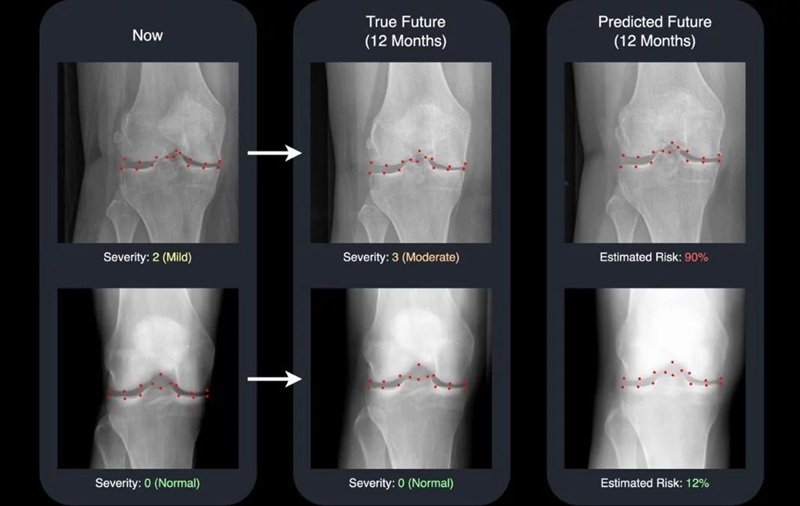
AI Generates Future Knee X-Rays to Predict Osteoarthritis Progression Risk
Osteoarthritis, a degenerative joint disease affecting over 500 million people worldwide, is the leading cause of disability among older adults. Current diagnostic tools allow doctors to assess damage... Read more
MRI
view channel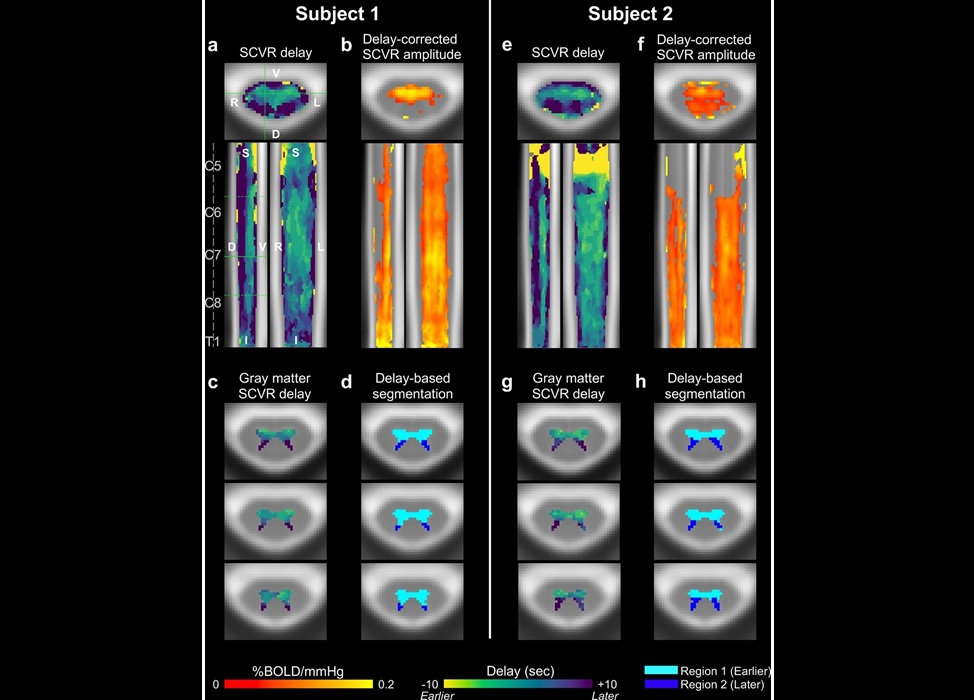
Novel Imaging Approach to Improve Treatment for Spinal Cord Injuries
Vascular dysfunction in the spinal cord contributes to multiple neurological conditions, including traumatic injuries and degenerative cervical myelopathy, where reduced blood flow can lead to progressive... Read more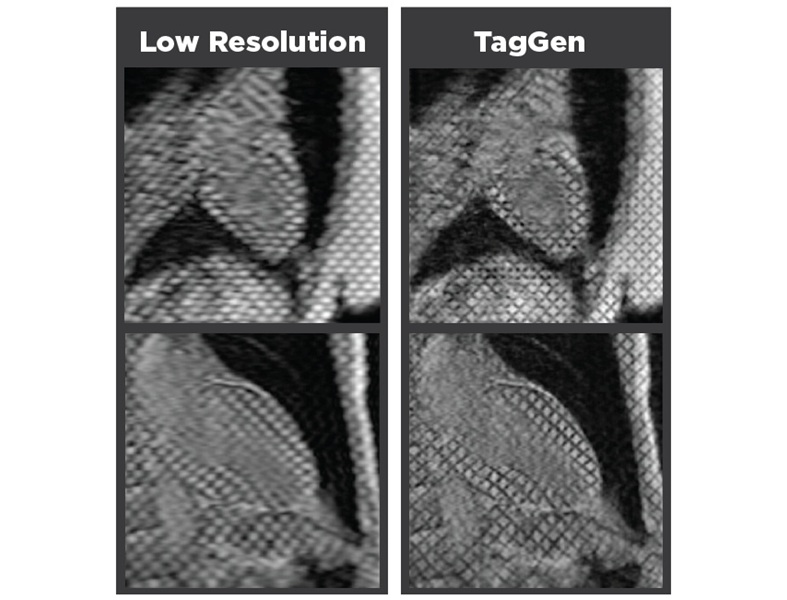
AI-Assisted Model Enhances MRI Heart Scans
A cardiac MRI can reveal critical information about the heart’s function and any abnormalities, but traditional scans take 30 to 90 minutes and often suffer from poor image quality due to patient movement.... Read more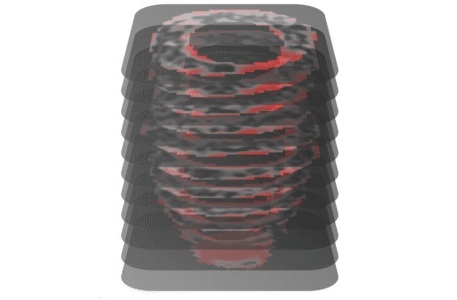
AI Model Outperforms Doctors at Identifying Patients Most At-Risk of Cardiac Arrest
Hypertrophic cardiomyopathy is one of the most common inherited heart conditions and a leading cause of sudden cardiac death in young individuals and athletes. While many patients live normal lives, some... Read more
Ultrasound
view channel
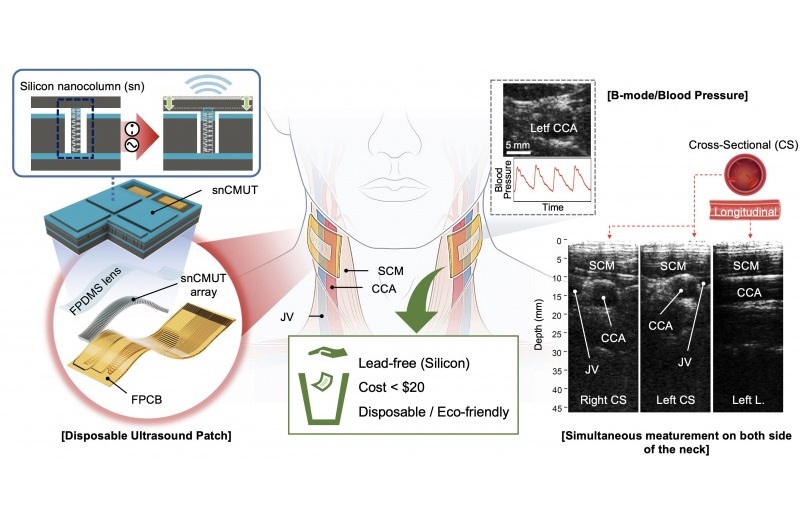
Wearable Ultrasound Imaging System to Enable Real-Time Disease Monitoring
Chronic conditions such as hypertension and heart failure require close monitoring, yet today’s ultrasound imaging is largely confined to hospitals and short, episodic scans. This reactive model limits... Read more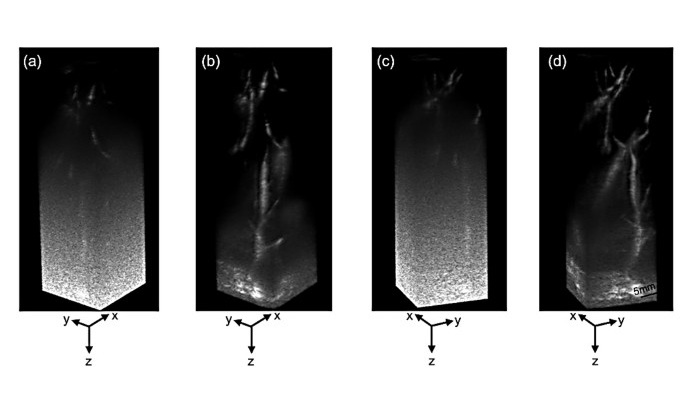
Ultrasound Technique Visualizes Deep Blood Vessels in 3D Without Contrast Agents
Producing clear 3D images of deep blood vessels has long been difficult without relying on contrast agents, CT scans, or MRI. Standard ultrasound typically provides only 2D cross-sections, limiting clinicians’... Read more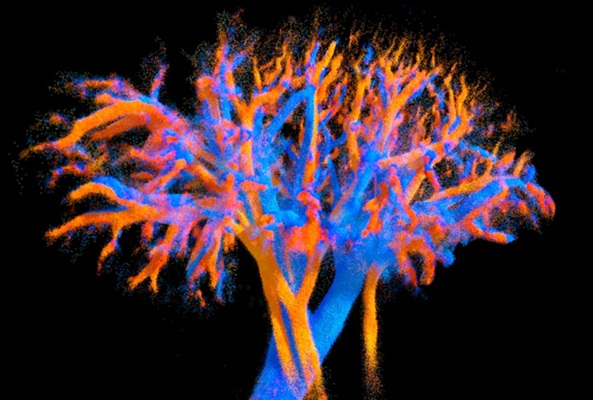
General/Advanced Imaging
view channel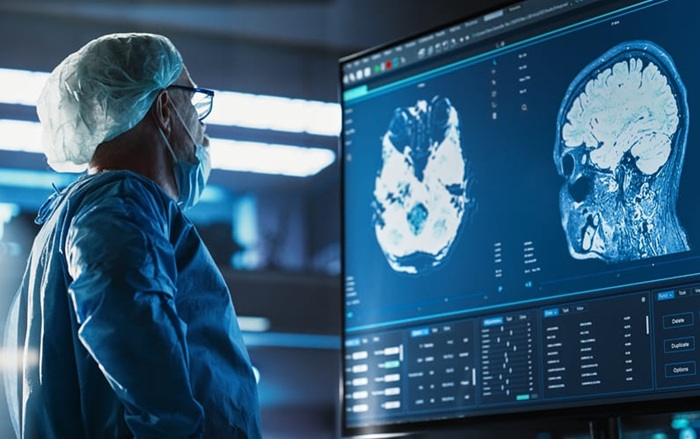
3D Scanning Approach Enables Ultra-Precise Brain Surgery
Precise navigation is critical in neurosurgery, yet even small alignment errors can affect outcomes when operating deep within the brain. A new 3D surface-scanning approach now provides a radiation-free... Read more
AI Tool Improves Medical Imaging Process by 90%
Accurately labeling different regions within medical scans, a process known as medical image segmentation, is critical for diagnosis, surgery planning, and research. Traditionally, this has been a manual... Read more
New Ultrasmall, Light-Sensitive Nanoparticles Could Serve as Contrast Agents
Medical imaging technologies face ongoing challenges in capturing accurate, detailed views of internal processes, especially in conditions like cancer, where tracking disease development and treatment... Read more
AI Algorithm Accurately Predicts Pancreatic Cancer Metastasis Using Routine CT Images
In pancreatic cancer, detecting whether the disease has spread to other organs is critical for determining whether surgery is appropriate. If metastasis is present, surgery is not recommended, yet current... Read moreImaging IT
view channel
New Google Cloud Medical Imaging Suite Makes Imaging Healthcare Data More Accessible
Medical imaging is a critical tool used to diagnose patients, and there are billions of medical images scanned globally each year. Imaging data accounts for about 90% of all healthcare data1 and, until... Read more
Global AI in Medical Diagnostics Market to Be Driven by Demand for Image Recognition in Radiology
The global artificial intelligence (AI) in medical diagnostics market is expanding with early disease detection being one of its key applications and image recognition becoming a compelling consumer proposition... Read more
Industry News
view channel
GE HealthCare and NVIDIA Collaboration to Reimagine Diagnostic Imaging
GE HealthCare (Chicago, IL, USA) has entered into a collaboration with NVIDIA (Santa Clara, CA, USA), expanding the existing relationship between the two companies to focus on pioneering innovation in... Read more
Patient-Specific 3D-Printed Phantoms Transform CT Imaging
New research has highlighted how anatomically precise, patient-specific 3D-printed phantoms are proving to be scalable, cost-effective, and efficient tools in the development of new CT scan algorithms... Read more
Siemens and Sectra Collaborate on Enhancing Radiology Workflows
Siemens Healthineers (Forchheim, Germany) and Sectra (Linköping, Sweden) have entered into a collaboration aimed at enhancing radiologists' diagnostic capabilities and, in turn, improving patient care... Read more