Study Finds Most Healthcare Institutions Plan to Use AI and Develop Own AI Algorithm
|
By MedImaging International staff writers Posted on 30 Jan 2020 |


|
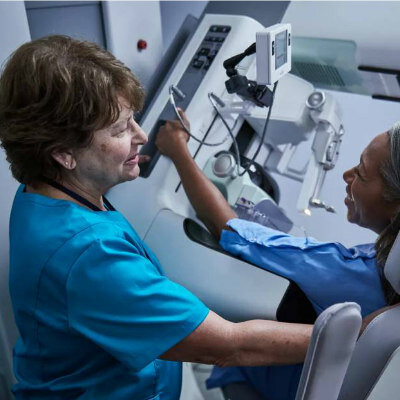
Illustration
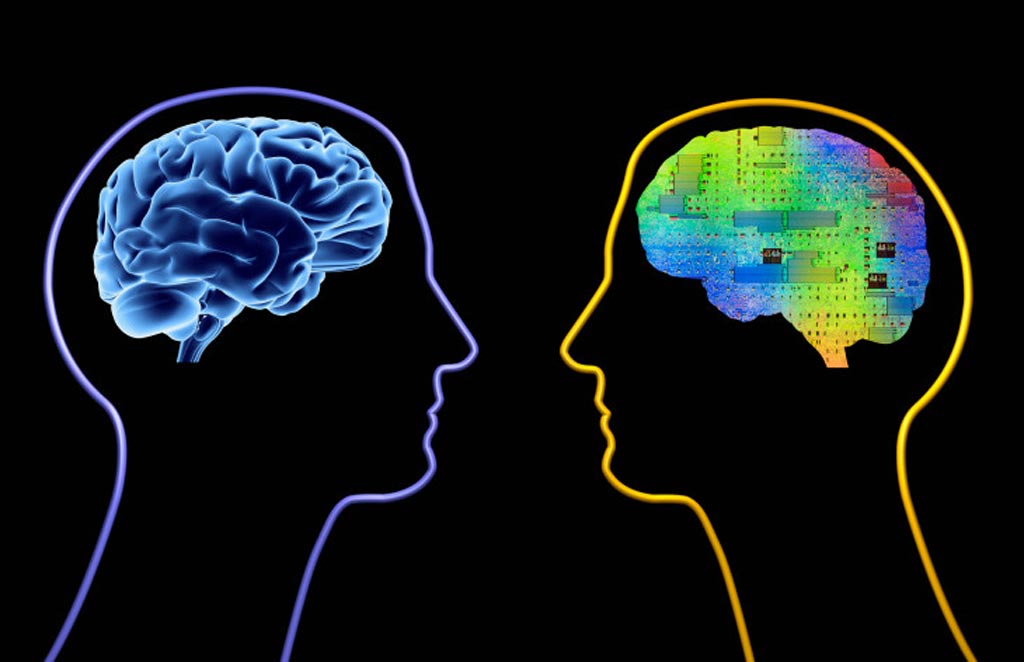
A new study of healthcare professionals has revealed that Artificial Intelligence (AI) is widely expected to drive important benefits across the health system, from increasing efficiency to improving patient outcomes, but may also be the key to making healthcare more human. AI’s benefits range from increasing the amount of time clinicians can spend with patients and on cross-care team collaboration to enhancing the ability to deliver preventative care.
The study of more than 900 healthcare professionals in the US and UK was conducted by MIT Technology Review Insights along with GE Healthcare (Chicago, IL, USA).
MIT Technology Review Insights is the custom publishing division of the MIT Technology Review technology magazine, and conducts qualitative and quantitative research and analysis, and publishes a wide variety of content, including articles, reports, infographics, videos, and podcasts. GE Healthcare is a leading provider of medical imaging, monitoring, biomanufacturing, and cell and gene therapy technologies, enabling precision health in diagnostics, therapeutics and monitoring through intelligent devices, data analytics, applications and services.
Based on the study, which examined how AI is currently impacting healthcare professionals and the patients they serve today, roadblocks to adoption and opportunities for the future, GE Healthcare and MIT Technology Review Insights found that AI implementation is pervasive with seven out of 10 healthcare providers already adopting or considering adopting AI. Nearly half of the medical professionals surveyed said that AI is already increasing their ability to spend time with and provide care to patients. Additionally, more than 78% of healthcare business leaders who reported they have deployed AI in their operations also reported that AI has helped drive workflow improvements, streamlining operational and administrative activities and delivering significant efficiencies toward transforming the future of healthcare.
Among those surveyed, 81% believed that AI would improve their performance by making them more competitive, and 80% believed that it is already helping or will help them improve revenues. Even more notably, institutions that have already implemented AI technologies reported that it was playing a key part in rebalancing physician workload from administrative to patient-focused tasks, resulting in more time with patients and collaborating with colleagues across healthcare disciplines. The respondents stated that core administrative tasks, such as updating electronic records, can take up to 10%of their typical work week. Conversely, respondents at institutions with robust AI deployments indicated that they spend nearly 66% less time writing reports than their counterparts. Additionally, 45% of medical professionals said that AI has allowed them to increase time for patient consultations and to perform surgeries. Almost half said that AI would enable more robust diagnoses and more focus on preventative medicine.
AI has also helped alleviate a significant challenge for healthcare providers and institutions facing a rise in health worker burnout over the past decade. In fact, 80% of those surveyed indicated that AI had been instrumental in helping to remove barriers and reduce worker burnout. This paves the way for future improvements as AI-enabled technology scales across organizations to help improve data analysis, enable better diagnoses and treatment predictions, and further free medical staff from administrative burdens. Additionally, the vast majority of survey respondents believe that AI represents the extension – not extinction – of professional capabilities in healthcare.
Some other key survey findings included medical professionals using AI applications seeing immediate gains in reducing clinical error; 75% of medical staff who have AI stating that it has enabled better predictions in the treatment of disease; 78% reported that their AI deployments have already created workflow improvements; 60% of AI-empowered medical staff expect to spend more time performing procedures versus administrative or other work; and 68% spend more time collaborating with other staff and across clinical care areas, leading to potential benefits in patient care and precision health.
These trends are only expected to grow with survey results indicating that nearly 80% of healthcare institutions plan to increase their spending on AI in the next two years, including diverse technologies ranging from medical imaging and diagnostics to patient data and risk analytics. Further, nearly three in four healthcare institutions that use or plan to use AI will develop their own AI algorithms in the next two years.
“Today, AI is being deployed at a scale where we can move from speculating about its potential for healthcare to tracking it,” said Kieran Murphy, President and CEO, GE Healthcare. “From increasing the time healthcare providers can spend with patients to advancing preventative care, we are tremendously encouraged by the trends emerging across the health ecosystem. As a company at the forefront of healthcare data analytics and AI, we believe this is just the tip of the iceberg in terms of how intelligent technology will transform lives.”
Related Links:
GE Healthcare





The study of more than 900 healthcare professionals in the US and UK was conducted by MIT Technology Review Insights along with GE Healthcare (Chicago, IL, USA).
MIT Technology Review Insights is the custom publishing division of the MIT Technology Review technology magazine, and conducts qualitative and quantitative research and analysis, and publishes a wide variety of content, including articles, reports, infographics, videos, and podcasts. GE Healthcare is a leading provider of medical imaging, monitoring, biomanufacturing, and cell and gene therapy technologies, enabling precision health in diagnostics, therapeutics and monitoring through intelligent devices, data analytics, applications and services.
Based on the study, which examined how AI is currently impacting healthcare professionals and the patients they serve today, roadblocks to adoption and opportunities for the future, GE Healthcare and MIT Technology Review Insights found that AI implementation is pervasive with seven out of 10 healthcare providers already adopting or considering adopting AI. Nearly half of the medical professionals surveyed said that AI is already increasing their ability to spend time with and provide care to patients. Additionally, more than 78% of healthcare business leaders who reported they have deployed AI in their operations also reported that AI has helped drive workflow improvements, streamlining operational and administrative activities and delivering significant efficiencies toward transforming the future of healthcare.
Among those surveyed, 81% believed that AI would improve their performance by making them more competitive, and 80% believed that it is already helping or will help them improve revenues. Even more notably, institutions that have already implemented AI technologies reported that it was playing a key part in rebalancing physician workload from administrative to patient-focused tasks, resulting in more time with patients and collaborating with colleagues across healthcare disciplines. The respondents stated that core administrative tasks, such as updating electronic records, can take up to 10%of their typical work week. Conversely, respondents at institutions with robust AI deployments indicated that they spend nearly 66% less time writing reports than their counterparts. Additionally, 45% of medical professionals said that AI has allowed them to increase time for patient consultations and to perform surgeries. Almost half said that AI would enable more robust diagnoses and more focus on preventative medicine.
AI has also helped alleviate a significant challenge for healthcare providers and institutions facing a rise in health worker burnout over the past decade. In fact, 80% of those surveyed indicated that AI had been instrumental in helping to remove barriers and reduce worker burnout. This paves the way for future improvements as AI-enabled technology scales across organizations to help improve data analysis, enable better diagnoses and treatment predictions, and further free medical staff from administrative burdens. Additionally, the vast majority of survey respondents believe that AI represents the extension – not extinction – of professional capabilities in healthcare.
Some other key survey findings included medical professionals using AI applications seeing immediate gains in reducing clinical error; 75% of medical staff who have AI stating that it has enabled better predictions in the treatment of disease; 78% reported that their AI deployments have already created workflow improvements; 60% of AI-empowered medical staff expect to spend more time performing procedures versus administrative or other work; and 68% spend more time collaborating with other staff and across clinical care areas, leading to potential benefits in patient care and precision health.
These trends are only expected to grow with survey results indicating that nearly 80% of healthcare institutions plan to increase their spending on AI in the next two years, including diverse technologies ranging from medical imaging and diagnostics to patient data and risk analytics. Further, nearly three in four healthcare institutions that use or plan to use AI will develop their own AI algorithms in the next two years.
“Today, AI is being deployed at a scale where we can move from speculating about its potential for healthcare to tracking it,” said Kieran Murphy, President and CEO, GE Healthcare. “From increasing the time healthcare providers can spend with patients to advancing preventative care, we are tremendously encouraged by the trends emerging across the health ecosystem. As a company at the forefront of healthcare data analytics and AI, we believe this is just the tip of the iceberg in terms of how intelligent technology will transform lives.”
Related Links:
GE Healthcare

Digital X-Ray Detector Panel
Acuity G4
Diagnostic Ultrasound System
DC-80A
Mammo DR Retrofit Solution
DR Retrofit Mammography
Biopsy Software
Affirm® Contrast
Latest Industry News News
- GE HealthCare and NVIDIA Collaboration to Reimagine Diagnostic Imaging
- Patient-Specific 3D-Printed Phantoms Transform CT Imaging
- Siemens and Sectra Collaborate on Enhancing Radiology Workflows
- Bracco Diagnostics and ColoWatch Partner to Expand Availability CRC Screening Tests Using Virtual Colonoscopy
- Mindray Partners with TeleRay to Streamline Ultrasound Delivery
- Philips and Medtronic Partner on Stroke Care
- Siemens and Medtronic Enter into Global Partnership for Advancing Spine Care Imaging Technologies
- RSNA 2024 Technical Exhibits to Showcase Latest Advances in Radiology
- Bracco Collaborates with Arrayus on Microbubble-Assisted Focused Ultrasound Therapy for Pancreatic Cancer
- Innovative Collaboration to Enhance Ischemic Stroke Detection and Elevate Standards in Diagnostic Imaging
- RSNA 2024 Registration Opens
- Microsoft collaborates with Leading Academic Medical Systems to Advance AI in Medical Imaging
- GE HealthCare Acquires Intelligent Ultrasound Group’s Clinical Artificial Intelligence Business
- Bayer and Rad AI Collaborate on Expanding Use of Cutting Edge AI Radiology Operational Solutions
- Polish Med-Tech Company BrainScan to Expand Extensively into Foreign Markets
- Hologic Acquires UK-Based Breast Surgical Guidance Company Endomagnetics Ltd.
Channels
Radiography
view channel
X-Ray Breakthrough Captures Three Image-Contrast Types in Single Shot
Detecting early-stage cancer or subtle changes deep inside tissues has long challenged conventional X-ray systems, which rely only on how structures absorb radiation. This limitation keeps many microstructural... Read more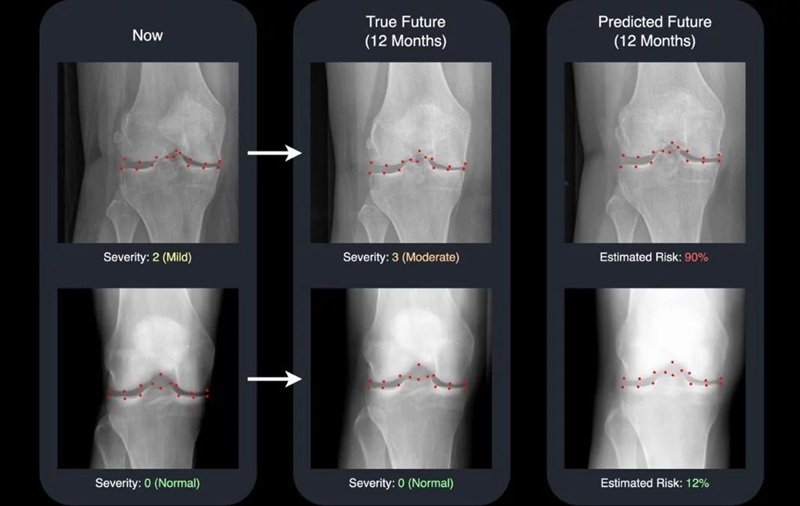
AI Generates Future Knee X-Rays to Predict Osteoarthritis Progression Risk
Osteoarthritis, a degenerative joint disease affecting over 500 million people worldwide, is the leading cause of disability among older adults. Current diagnostic tools allow doctors to assess damage... Read more
MRI
view channel
Novel Imaging Approach to Improve Treatment for Spinal Cord Injuries
Vascular dysfunction in the spinal cord contributes to multiple neurological conditions, including traumatic injuries and degenerative cervical myelopathy, where reduced blood flow can lead to progressive... Read more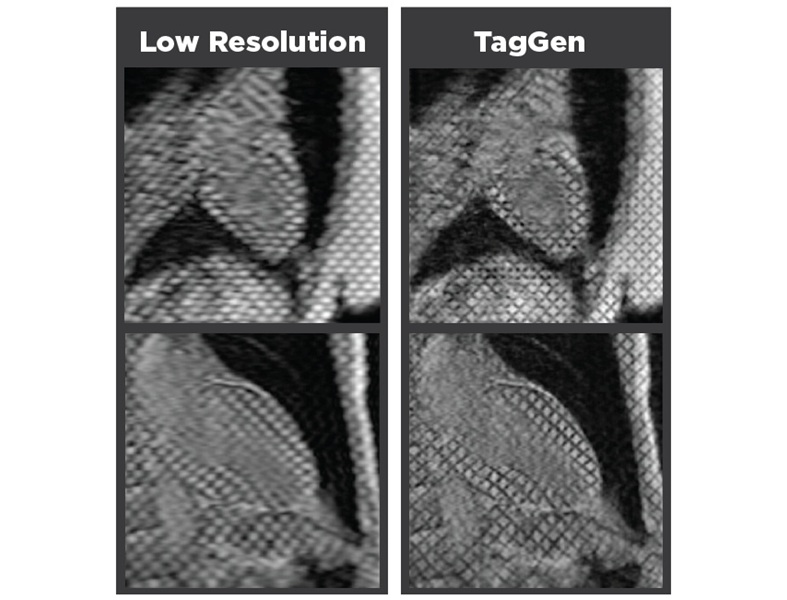
AI-Assisted Model Enhances MRI Heart Scans
A cardiac MRI can reveal critical information about the heart’s function and any abnormalities, but traditional scans take 30 to 90 minutes and often suffer from poor image quality due to patient movement.... Read more
AI Model Outperforms Doctors at Identifying Patients Most At-Risk of Cardiac Arrest
Hypertrophic cardiomyopathy is one of the most common inherited heart conditions and a leading cause of sudden cardiac death in young individuals and athletes. While many patients live normal lives, some... Read more
Ultrasound
view channel
Wearable Ultrasound Imaging System to Enable Real-Time Disease Monitoring
Chronic conditions such as hypertension and heart failure require close monitoring, yet today’s ultrasound imaging is largely confined to hospitals and short, episodic scans. This reactive model limits... Read more
Ultrasound Technique Visualizes Deep Blood Vessels in 3D Without Contrast Agents
Producing clear 3D images of deep blood vessels has long been difficult without relying on contrast agents, CT scans, or MRI. Standard ultrasound typically provides only 2D cross-sections, limiting clinicians’... Read more

Nuclear Medicine
view channel
PET Imaging of Inflammation Predicts Recovery and Guides Therapy After Heart Attack
Acute myocardial infarction can trigger lasting heart damage, yet clinicians still lack reliable tools to identify which patients will regain function and which may develop heart failure.... Read more
Radiotheranostic Approach Detects, Kills and Reprograms Aggressive Cancers
Aggressive cancers such as osteosarcoma and glioblastoma often resist standard therapies, thrive in hostile tumor environments, and recur despite surgery, radiation, or chemotherapy. These tumors also... Read more
New Imaging Solution Improves Survival for Patients with Recurring Prostate Cancer
Detecting recurrent prostate cancer remains one of the most difficult challenges in oncology, as standard imaging methods such as bone scans and CT scans often fail to accurately locate small or early-stage tumors.... Read more
General/Advanced Imaging
view channel
3D Scanning Approach Enables Ultra-Precise Brain Surgery
Precise navigation is critical in neurosurgery, yet even small alignment errors can affect outcomes when operating deep within the brain. A new 3D surface-scanning approach now provides a radiation-free... Read more
AI Tool Improves Medical Imaging Process by 90%
Accurately labeling different regions within medical scans, a process known as medical image segmentation, is critical for diagnosis, surgery planning, and research. Traditionally, this has been a manual... Read more
New Ultrasmall, Light-Sensitive Nanoparticles Could Serve as Contrast Agents
Medical imaging technologies face ongoing challenges in capturing accurate, detailed views of internal processes, especially in conditions like cancer, where tracking disease development and treatment... Read more
AI Algorithm Accurately Predicts Pancreatic Cancer Metastasis Using Routine CT Images
In pancreatic cancer, detecting whether the disease has spread to other organs is critical for determining whether surgery is appropriate. If metastasis is present, surgery is not recommended, yet current... Read moreImaging IT
view channel
New Google Cloud Medical Imaging Suite Makes Imaging Healthcare Data More Accessible
Medical imaging is a critical tool used to diagnose patients, and there are billions of medical images scanned globally each year. Imaging data accounts for about 90% of all healthcare data1 and, until... Read more