


Database with Physician Input and Innovative Eye-Tracking Techniques Devised
|
By MedImaging International staff writers Posted on 25 Aug 2010 |


|
Digital archives of biomedical images could soon put vital data at physicians' fingertips within seconds, demonstrating how computers can improve the manner in which medicine is practiced.
The current reality, however, is not quite there yet, with databases virtually overwhelmed by the explosion of medical imaging. Rochester Institute of Technology (NY, USA) professor Anne Haake recently won grants from the U.S. National Science Foundation (NSF; Arlington, VA, USA) and the U.S. National Institutes of Health (Bethesda, MD, USA) to address this problem. Prof. Haake foresees an image database built on input from the intended end-users and designed from the beginning with flexible user interfaces. She and her interdisciplinary team will develop a prototype using input from dermatologists to refine the search process for images of various skin conditions.
"We need to involve users from the very beginning,” said Prof. Haake, professor of information sciences and technologies at the B. Thomas Golisano College of Computing and Information Sciences. "This is especially true in the biomedical area where there is so much domain knowledge that it will be specific to each particular specialty.”
Prof. Haake understands the genuine need to make biomedical images useful. She began her career as a developmental biologist before pursuing computing and biomedical informatics. This project combines her two strengths and was inspired by research she conducted while on sabbatical at the NIH National Library of Medicine.
Dr. Cara Calvelli, a dermatologist and a professor in the physician assistant (PA) program in RIT's College of Science, has recruited dermatologists, residents, and PA students for the project. She is also helping to describe accurately the sample images, some of which come from her own collection. "The best way to learn is to see patients again and again with various disorders,” Dr. Calvelli stated. "When you can't get the patients themselves, getting good pictures, and learning how to describe them is second best.”
Funding Prof. Haake won from the NSF will support visual perception research using eye tracking and the design of a content-based image retrieval system accessible through touch, gaze, voice, and gesture; the NIH portion of the project will be used to fuse image understanding and medical knowledge.
Bridging the "semantic gap” is the challenge facing researchers working in content-based image retrieval, according to Prof. Haake. Search functions can go awry when computer engineered algorithms trip on nuances and fail to differentiate between disparate objects, such as a ship and a whale. Constructing a system based on end-user knowledge can prevent semantic problems from occurring.
Pengcheng Shi, director for graduate studies and research in the Golisano College, is providing his expertise in image understanding. "For many years computing/technical people have said we can write algorithms such that it will work,” he noted. "But people start to realize that machines are not all that powerful. At the end of the day we need to put the human back into it. What are the physicians looking at and how are they looking at it in order to make their decisions?”
Related Links:
Rochester Institute of Technology




The current reality, however, is not quite there yet, with databases virtually overwhelmed by the explosion of medical imaging. Rochester Institute of Technology (NY, USA) professor Anne Haake recently won grants from the U.S. National Science Foundation (NSF; Arlington, VA, USA) and the U.S. National Institutes of Health (Bethesda, MD, USA) to address this problem. Prof. Haake foresees an image database built on input from the intended end-users and designed from the beginning with flexible user interfaces. She and her interdisciplinary team will develop a prototype using input from dermatologists to refine the search process for images of various skin conditions.
"We need to involve users from the very beginning,” said Prof. Haake, professor of information sciences and technologies at the B. Thomas Golisano College of Computing and Information Sciences. "This is especially true in the biomedical area where there is so much domain knowledge that it will be specific to each particular specialty.”
Prof. Haake understands the genuine need to make biomedical images useful. She began her career as a developmental biologist before pursuing computing and biomedical informatics. This project combines her two strengths and was inspired by research she conducted while on sabbatical at the NIH National Library of Medicine.
Dr. Cara Calvelli, a dermatologist and a professor in the physician assistant (PA) program in RIT's College of Science, has recruited dermatologists, residents, and PA students for the project. She is also helping to describe accurately the sample images, some of which come from her own collection. "The best way to learn is to see patients again and again with various disorders,” Dr. Calvelli stated. "When you can't get the patients themselves, getting good pictures, and learning how to describe them is second best.”
Funding Prof. Haake won from the NSF will support visual perception research using eye tracking and the design of a content-based image retrieval system accessible through touch, gaze, voice, and gesture; the NIH portion of the project will be used to fuse image understanding and medical knowledge.
Bridging the "semantic gap” is the challenge facing researchers working in content-based image retrieval, according to Prof. Haake. Search functions can go awry when computer engineered algorithms trip on nuances and fail to differentiate between disparate objects, such as a ship and a whale. Constructing a system based on end-user knowledge can prevent semantic problems from occurring.
Pengcheng Shi, director for graduate studies and research in the Golisano College, is providing his expertise in image understanding. "For many years computing/technical people have said we can write algorithms such that it will work,” he noted. "But people start to realize that machines are not all that powerful. At the end of the day we need to put the human back into it. What are the physicians looking at and how are they looking at it in order to make their decisions?”
Related Links:
Rochester Institute of Technology

Multi-Use Ultrasound Table
Clinton
High-Precision QA Tool
DEXA Phantom
X-ray Diagnostic System
FDX Visionary-A
Silver Member
X-Ray QA Device
Accu-Gold+ Touch Pro
Latest Imaging IT News
- Interactive AI Tool Supports Explainable Lung Nodule Assessment
- Breast Imaging Software Enhances Visualization and Tissue Characterization in Challenging Cases
- New Google Cloud Medical Imaging Suite Makes Imaging Healthcare Data More Accessible
- Global AI in Medical Diagnostics Market to Be Driven by Demand for Image Recognition in Radiology
- AI-Based Mammography Triage Software Helps Dramatically Improve Interpretation Process
- Artificial Intelligence (AI) Program Accurately Predicts Lung Cancer Risk from CT Images
- Image Management Platform Streamlines Treatment Plans
- AI-Based Technology for Ultrasound Image Analysis Receives FDA Approval
- AI Technology for Detecting Breast Cancer Receives CE Mark Approval
- Digital Pathology Software Improves Workflow Efficiency
Channels
Radiography
view channel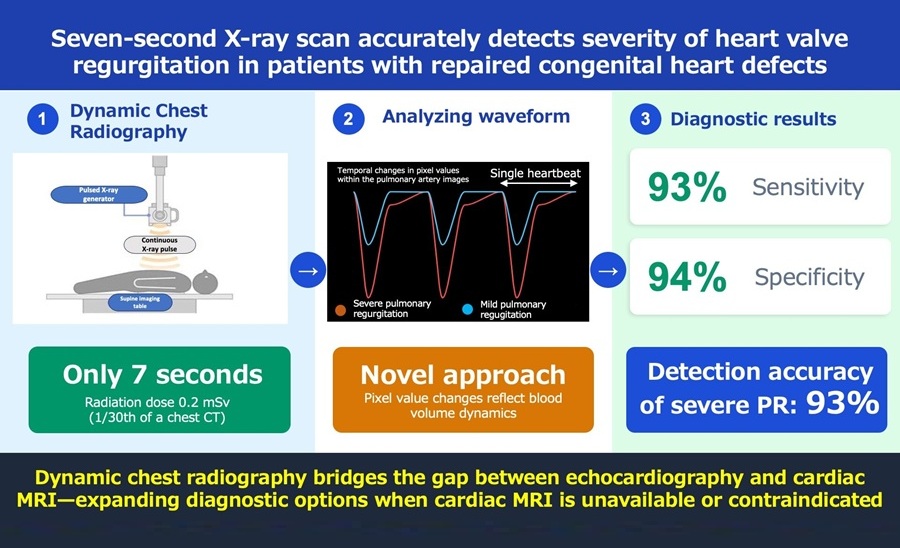
Rapid X-Ray Test Quantifies Pulmonary Regurgitation After Tetralogy of Fallot Repair
Tetralogy of Fallot is the most common cyanotic congenital heart defect and can leave patients with pulmonary valve regurgitation, a backward flow of blood into the right ventricle after repair.... Read more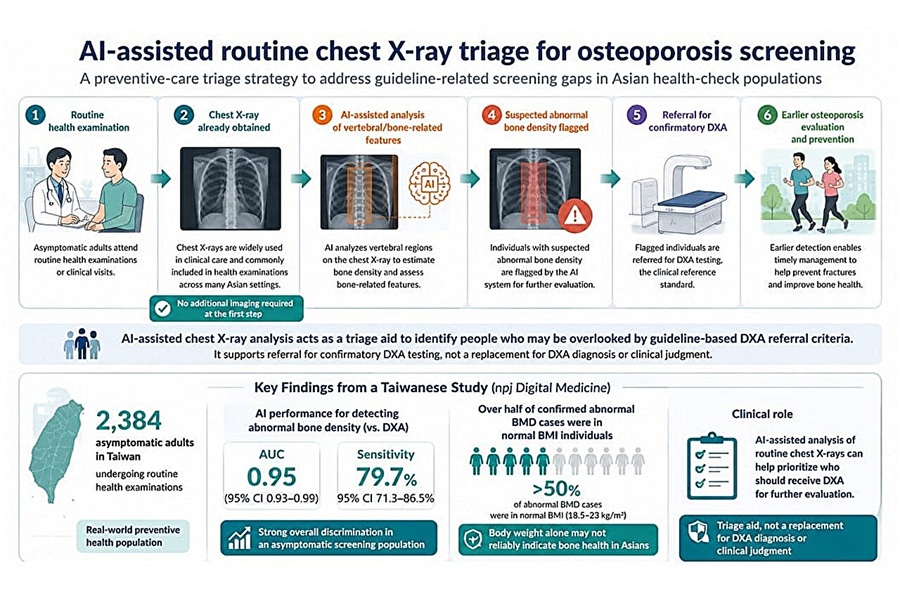
AI Tool Flags Osteoporosis Risk from Routine Chest X-Rays
Osteoporosis is a progressive loss of bone density that is often silent until a fracture occurs. Current screening frameworks concentrate on older women and select high-risk groups. Many men, younger adults,... Read more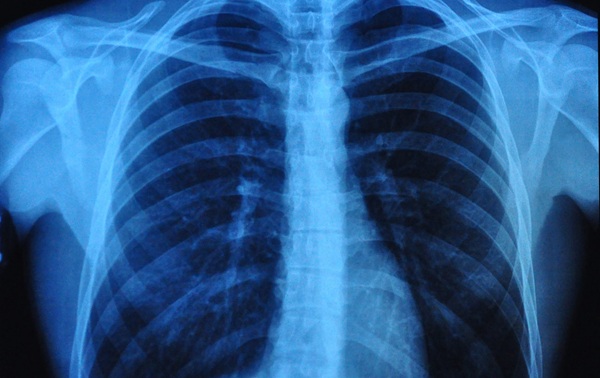
MRI
view channel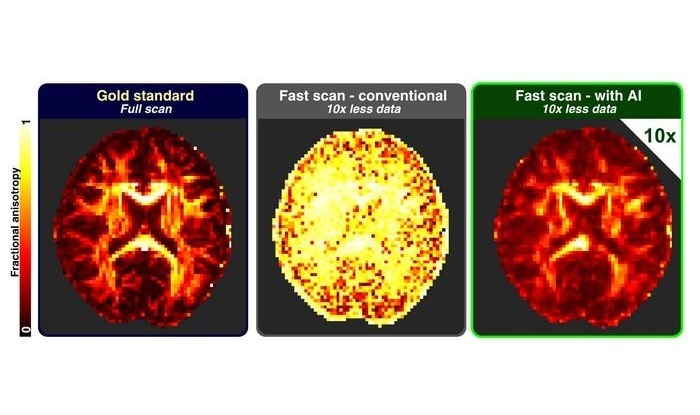
AI Approach Could Shorten Advanced Brain MRI Scans by Up to 90%
Long acquisition times for advanced brain magnetic resonance imaging (MRI) can limit access, extend waiting lists, and disrupt clinical workflows. Reducing data requirements without sacrificing image fidelity... Read more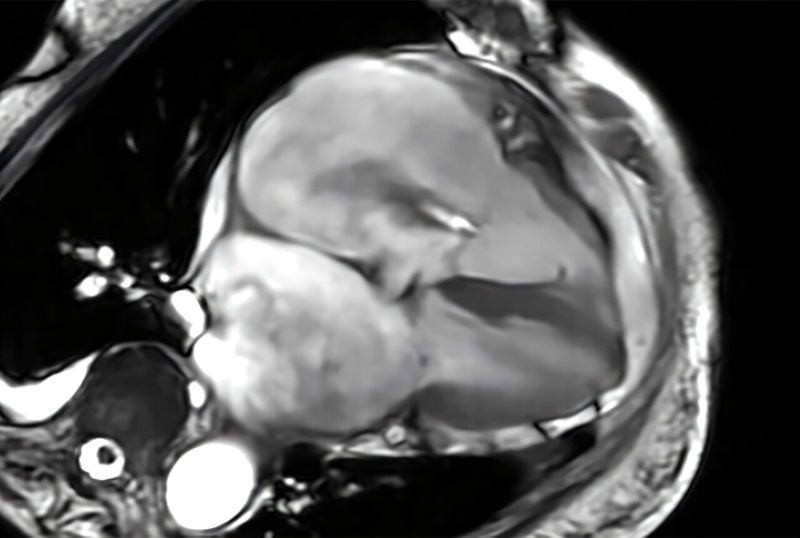
Cardiac MRI Measure Improves Risk Prediction in Tricuspid Regurgitation
Tricuspid regurgitation, in which blood flows back from the right ventricle into the right atrium, can lead to progressive right-sided heart failure. Clinicians need reliable ways to gauge severity and... Read more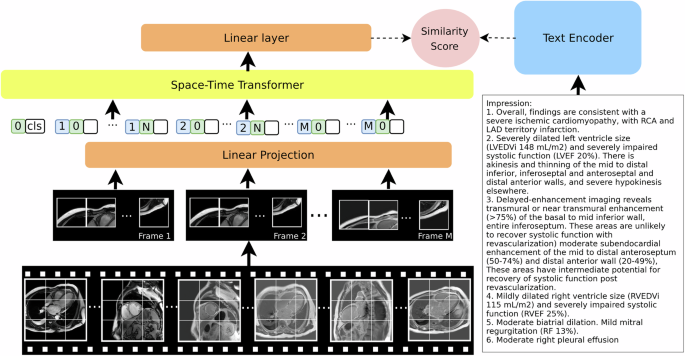
Ultrasound
view channel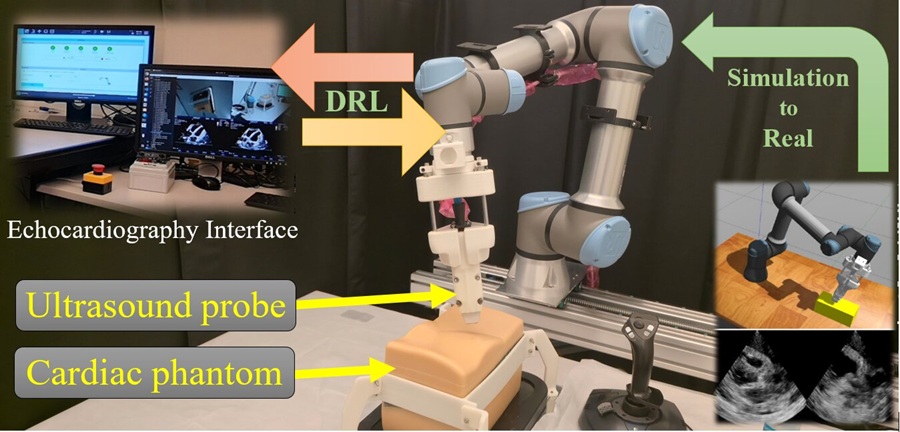
AI Robotic Ultrasound System Automates Echocardiography and Improves Consistency
Echocardiography, an ultrasound examination of the heart, is central to diagnosing and managing cardiovascular disease. Many services struggle with limited availability of skilled sonographers, variable... Read more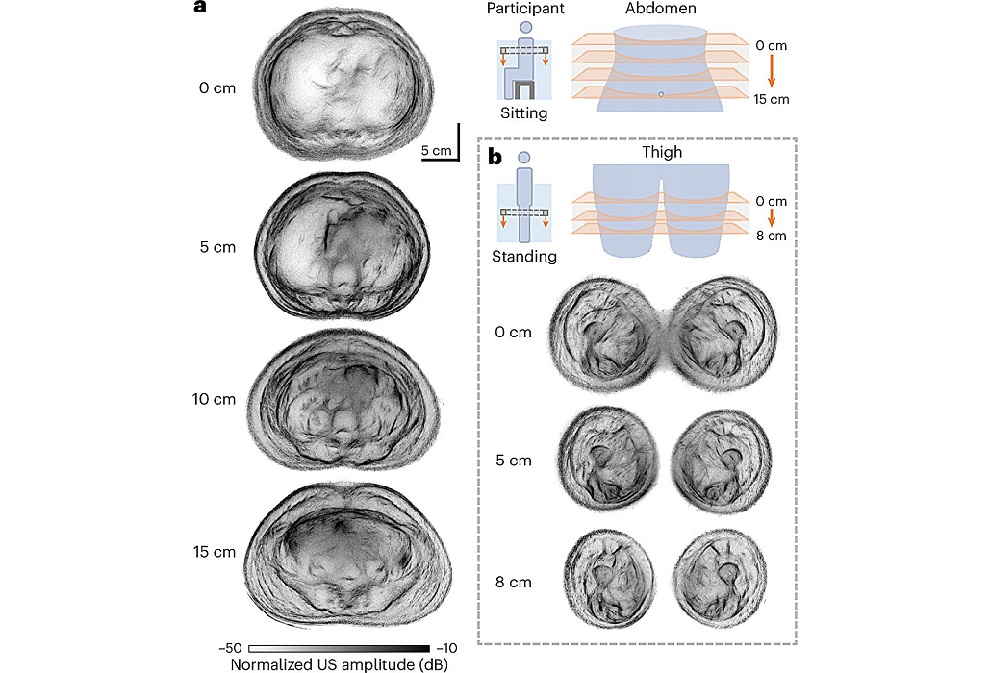
Whole Cross-Section Ultrasound System Enables Operator-Independent Imaging
Conventional ultrasound is central to bedside imaging but is limited by a narrow field of view and operator variability. Comprehensive cross-sectional assessment typically requires computed tomography... Read more
Nuclear Medicine
view channel![Image: (A-C) Representative whole-body maximum-intensity projection images and regional fused PET/CT images from three histologically confirmed osteosarcoma patients who underwent paired [68Ga]Ga-B7-H3-BCH PET/CT and 18F-FDGE PET/CT within 7 days. (D) Multimodal imaging evaluation of patient 3, including X-ray, MRI (T2-weighted imaging, T2WI), CT, and B7-H3 PET/CT. (Photo courtesy of SNMMI)](https://globetechcdn.com/mobile_medicalimaging/images/stories/articles/article_images/2026-06-07/294811110_image_1.jpg "Image: (A-C) Representative whole-body maximum-intensity projection images and regional fused PET/CT images from three histologically confirmed osteosarcoma patients who underwent paired [68Ga]Ga-B7-H3-BCH PET/CT and 18F-FDGE PET/CT within 7 days. (D) Multimodal imaging evaluation of patient 3, including X-ray, MRI (T2-weighted imaging, T2WI), CT, and B7-H3 PET/CT. (Photo courtesy of SNMMI)")
Targeted PET Platform Guides Osteosarcoma Resection and Margin Verification
Osteosarcoma, an aggressive primary bone cancer that mainly affects children and adolescents, demands wide excision to prevent local recurrence. Surgeons must achieve negative margins while preserving... Read more
Portable PET System Enables Real-Time Bedside Guidance for Biopsies and Ablations
Interventional radiology procedures typically rely on ultrasound, X-ray fluoroscopy, or computed tomography for image guidance. These modalities visualize anatomy but offer limited molecular information,... Read more
General/Advanced Imaging
view channel
AI Tool Enables Real-Time Diffuse Optical Tomography for Brain Lesion Detection
Diffuse optical tomography is a noninvasive imaging technique that uses near-infrared light to detect internal abnormalities such as cerebral hemorrhage and tumors. Its clinical utility for real-time ... Read more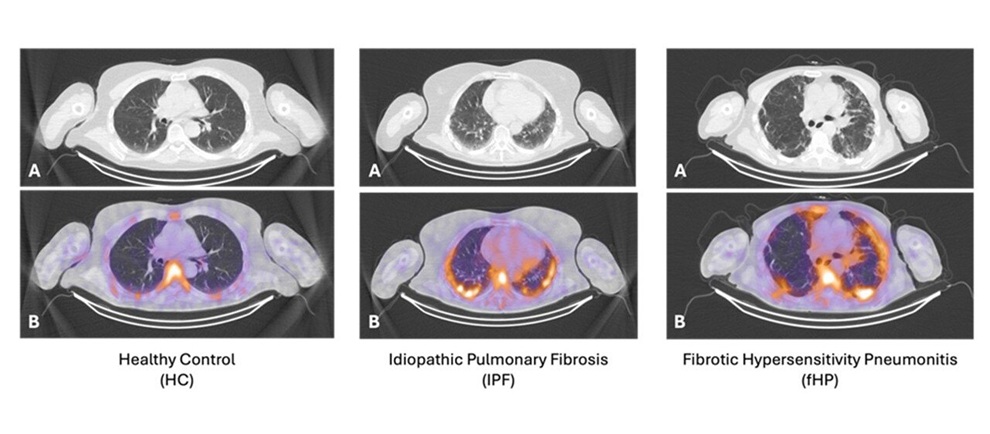
New SPECT/CT Method Differentiates Inflammation from Fibrosis in Interstitial Lung Disease
Interstitial lung disease (ILD) encompasses more than 200 disorders that inflame or scar the lung interstitium and can lead to progressive respiratory failure. Determining whether active inflammation is... Read more
Industry News
view channel
GE HealthCare Showcases AI-Enabled Nuclear Medicine Portfolio at SNMMI 2026
Nuclear medicine is expanding rapidly as health systems adopt theranostics and broaden access to radiopharmaceuticals, increasing demand for scalable operations and consistent diagnostic confidence.... Read more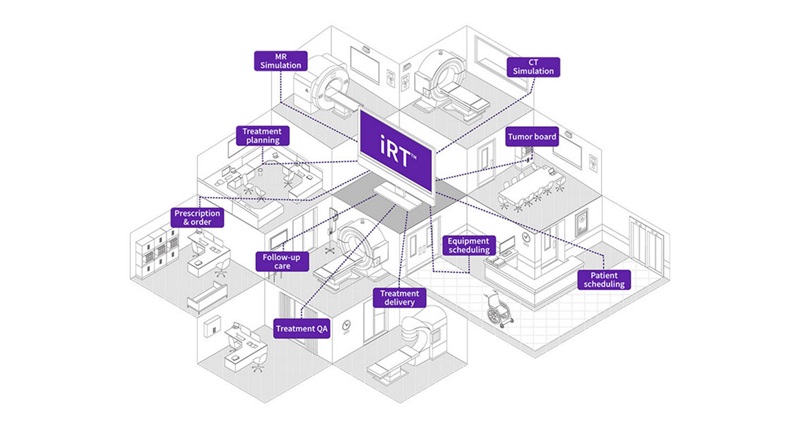
GE HealthCare Highlights AI-Supported Radiation Therapy Tools at ESTRO 2026
At the European Society for Radiotherapy and Oncology (ESTRO) 2026 Congress in Stockholm, GE HealthCare is highlighting Intelligent Radiation Therapy (iRT), MIM Software innovations, and BK Medical surgical... Read more