


AI Detection Tool Improves Identification of Lobular Breast Cancer
Posted on 21 Apr 2026
Breast cancer screening seeks early detection, yet some subtypes remain difficult to visualize on mammography, risking delayed diagnosis. On average, 1 in 20 women worldwide will develop breast cancer, and annual cases could reach 3.2 million by 2050 if current rates persist. Invasive lobular cancer, representing about 10–15% of cases, can be particularly challenging to detect because of its linear growth pattern. A new artificial intelligence-enabled mammography solution now offers high sensitivity for localizing these cancers in a retrospective analysis.
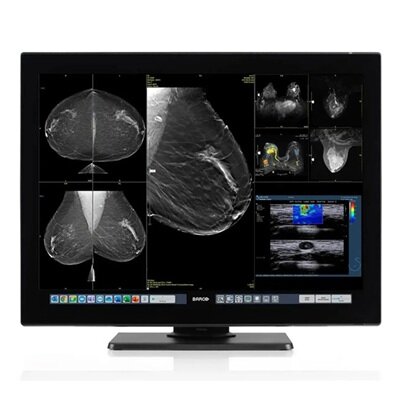
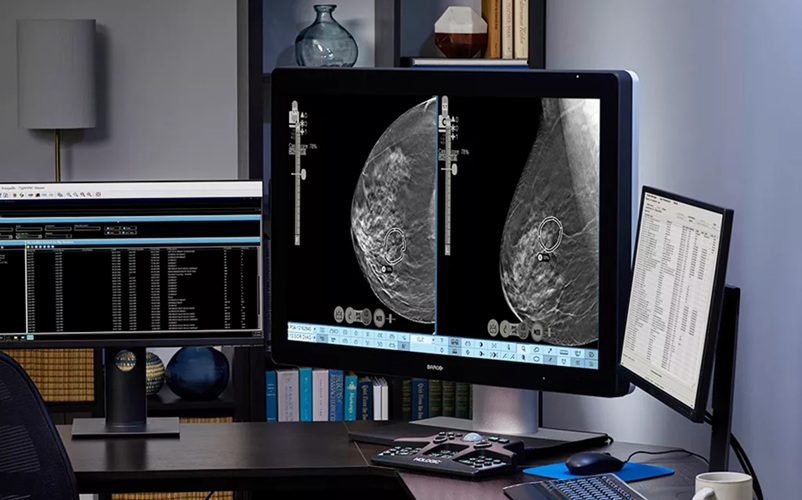
Hologic’s Genius AI Detection solution is a mammography screening technology designed to locate lesions likely to represent breast cancer. The system highlights suspicious areas at radiologists’ workstations for concurrent reading to support interpretation. Its deep learning algorithm is trained on a large, diverse patient base to provide pattern recognition across a wide spectrum of presentations.
New findings were presented at the Society of Breast Imaging (SBI) Symposium in Seattle. In a retrospective, single-center study at Massachusetts General Hospital, investigators reviewed invasive lobular cancer cases diagnosed over 10 years, categorizing 195 cancers detected at routine screening and 44 cancers diagnosed within a year after a negative screening. Using Genius AI Detection to analyze all 239 cases, the technology identified and correctly localized close to 90% of confirmed invasive lobular cancers. It also identified 43% of the cases that had been interpreted as negative at the prior screening.
Study limitations include the absence of data on false-positive rates, recall rates, biopsy outcomes, and downstream patient management, as well as the retrospective evaluation of AI performance rather than real-time use. As a single-center study limited to invasive lobular cancer, generalizability and cross-subtype comparisons are constrained, and the retrospective design suggests that observed gains may represent a theoretical upper bound rather than real-world clinical impact.
Also at the Society of Breast Imaging Symposium, a lunch-and-learn session addressed implementation of Hologic’s 3DQuorum imaging technology. The software uses AI to reduce the number of three-dimensional imaging “slices” radiologists need to review, achieving this reduction without compromising image quality, sensitivity, or accuracy.
“Invasive lobular cancers are more challenging to detect on a mammogram because of their unique characteristics. In the study, AI maintained high sensitivity for flagging these cancers, including some that had been interpreted as negative at a prior screening. These data add to a growing body of evidence that AI can act as a powerful supportive tool for radiologists as they review the full spectrum of breast cancers,” said Mark Horvath, President of Breast & Skeletal Health Solutions at Hologic.