






Nuclear Medicine
Proton Therapy Room Designed to Offer Comfort, Relaxation to Patient
A new patient-centric proton therapy room has been designed to stimulate patient comfort during proton treatments by allowing patients to selectively add relaxing sound, light, and images to the treatment room environment before they initiate therapy. More...05 Nov 2012
PET Radiopharmaceutical Receives European Endorsement for Imaging of β-Amyloid Density
A European health agency has recommended marketing authorization for Amyvid as a diagnostic imaging agent in patients who are being evaluated for Alzheimer’s disease and other causes of cognitive decline. More...30 Oct 2012
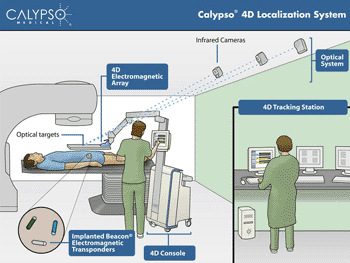
PET Offers Prediction of Early Response to Head and Neck Cancer Treatment
A new study found that PET imaging with 3'-deoxy-3'F-18-fluorothymidine during treatment and early follow-up has the potential to predict therapeutic responses and identify patients needing close follow-up to identify recurring or persistent. More...15 Oct 2012
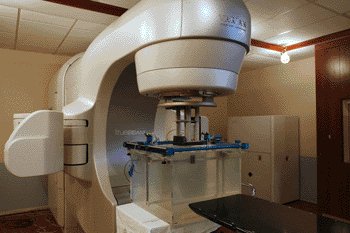
Leading Cancer Center Uses High-Intensity Radiotherapy to Deliver Precise Brain Radiosurgery
Clinicians have begun brain radiosurgery treatments that enable patients to spend less time on the treatment table while increasing precision by minimizing the chance of movement during treatment. More...11 Oct 2012
SPECT/CT Technique Provides Improved Detection of Lymph Node Metastasis in Patients with Melanoma
Preoperative 3D visualization of sentinel lymph nodes used with SPECT/CT imaging was associated with a higher rate of identification of positive sentinel lymph nodes and a higher rate of disease-free survival among patients with melanoma, according to new findings. More...25 Sep 2012



X-Ray Illuminator
X-Ray Viewbox Illuminators
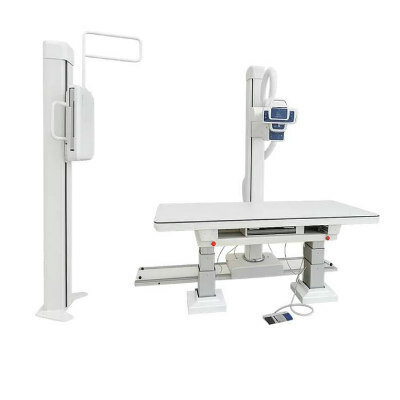

Floor‑Mounted Digital X‑Ray System
MasteRad MX30+
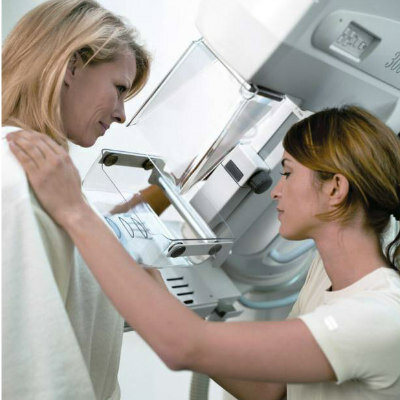

Mammo DR Retrofit Solution
DR Retrofit Mammography

High-Precision QA Tool
DEXA Phantom
In Other News
New PET Imaging Agent Has Potential for Diagnosing Alzheimer’s
PET Imaging Agent for Detection of Tau Pathologies Shows Promise for Alzheimer’s Patients
Pretreatment PET Imaging of Lymph Nodes Predicts Recurrence in Breast Cancer Patients
No Evidence That PET and PET/CT Has Advantages in Screening for Ovarian Cancer
Novel Imaging Technology Improves Image Quality, Lessens Radiation
Lower-Dose Molecular Breast Imaging Possible for Single-Head Imaging Systems
SPECT/CT Imaging Agent Helps Diagnose Difficult Cases of Infectious Endocarditis
Alzheimer’s Plaques Seen in PET Brain Scans Could Identify Future Cognitive Decline
Single Dose Radiation During Surgery Helps Early Stage Breast Cancer Patients Forgo Longer Radiation Course
Molecular Breast Imaging May Provide Better Detection Than MRI for Women with Dense Breasts
Progress Achieved in Reducing Radiation for Pediatric Hodgkin Lymphoma Treatment
PET Technique to Play Key Role in Alzheimer’s Diagnosis and Treatment
SPECT/CT Technology Offers High Speed, Low Radiation Dose
Proton Therapy System Designed to Have Small Footprint and Reduced Implementation and Operational Costs
Metabolic Imaging for Esophageal Cancer Patients Can Increase Life Expectancy
Radiosurgical Technology Reduces Number of Treatment Sessions and Takes Better Advantage of Motion
New Generation of Automated Radiochemistry Developed for PET Imaging Probe Production
Hysterectomies Can Be Avoided for Cervical Cancer Patients Using 3D Image-Guided Brachytherapy
MRI-Guided Radiation Therapy System Offers Integrated Imaging and Radiation Therapy
PET, SPECT Infusion Enhancements Streamline Infusion Scheduling
Need for Additional Imaging in PET/CT Oncologic Reports Reexamined
User Interface Streamlines Proton Therapy Steps
Handheld 3D Imaging Device for the OR May Transform Radio-Guided Surgeries


The Nuclear Medicine channel of MedImaging brings the latest in research and clinical radiotherapy, proton therapy, PET-CT, SPECT, SQUID, radiopharmacology, scintillography, trends and safety concerns.