


Portable Imaging Scanner to Diagnose Lymphatic Disease in Real Time
Posted on 01 Feb 2026
Lymphatic disorders affect hundreds of millions of people worldwide and are linked to conditions ranging from limb swelling and organ dysfunction to birth defects and cancer-related complications. Diagnosing these diseases remains difficult because existing imaging methods lack sufficient resolution and functional detail. As a result, lymphatic disorders are often misdiagnosed, delaying effective treatment and leading to poor outcomes. Researchers are now developing a portable imaging solution designed to visualize how the lymphatic system actually functions in real time.
A research team at the University of Arizona (Tucson, AZ, USA) is creating a new imaging modality called Phase Change Ultrasound Lymphograph (PCUS) that is designed to be small and lightweight enough for physicians to carry directly to patient appointments. PCUS is designed to overcome the unique challenges of lymphatic imaging. Lymphatic vessels are tiny, collapsible, translucent, and carry fluid that moves slowly under low pressure, making them far harder to visualize than blood vessels.

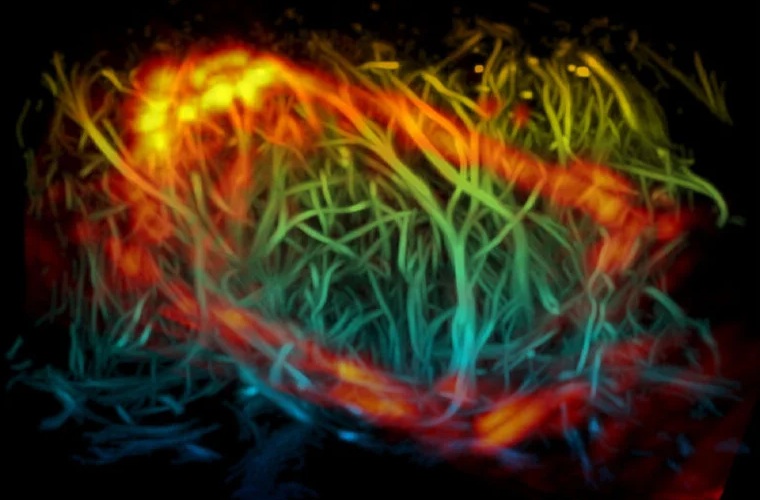
By using phase-change contrast agents, the device will enable super-resolution mapping of lymphatic vessels, lymph flow, and lymph nodes. The PCUS approach is designed to generate real-time images that provide quantitative information about both lymphatic anatomy and function. Unlike conventional ultrasound or MRI, the new modality aims to capture how lymphatic vessels contract, how fast lymph flows, and where obstructions occur. This level of detail could allow clinicians to screen for lymphatic abnormalities, pinpoint blockage sites, and assess functional impairment with much greater accuracy than currently possible.
If successful, the device could significantly improve how lymphatic diseases are diagnosed, monitored, and treated. Physicians could use PCUS to guide treatment decisions, track patient response over time, and determine whether therapies are restoring lymphatic flow or relieving obstructions. The research team aims to make the technology affordable, accessible, and simple to use in routine clinical settings. The goal is to have the imaging modality and medical device ready for clinical use within the next five years, potentially reshaping care for patients with lymphatic disorders.
"What we are looking to do is to fill an unmet need for better methods of looking at the lymphatic system – having something that's portable, accessible to patients and simple to use," said Professor Russell Witte, PhD, who is the lead investigator on the project. "Our goal is to build a device to provide images in real time that can provide quantitative information on the anatomy and function of a person's lymphatic system."
Related Links:
University of Arizona