


AI MRI Tool Quantifies Muscle Fat to Assess Cardiometabolic Risk
Posted on 11 May 2026
Intermuscular adipose tissue is fat that accumulates between muscle fibers and around muscle groups. It can be difficult to quantify in routine practice, yet it is linked to cardiometabolic disease that drives cardiovascular morbidity. Clinicians need practical tools to detect at-risk patients who may appear healthy by standard measures. To help address this challenge, German researchers have developed a deep learning approach that analyzes magnetic resonance imaging (MRI) to characterize hidden muscle fat and lean muscle mass linked with cardiometabolic risk.
At the Technical University of Munich (TUM), investigators used a deep learning model and a segmentation algorithm they developed to quantify intermuscular adipose tissue and functional lean muscle in paraspinal muscles on whole-body MRI. The analysis focused on the large muscle groups that run along the spine between the neck and pelvis. The approach replaces labor-intensive manual measurements with automated image analysis.
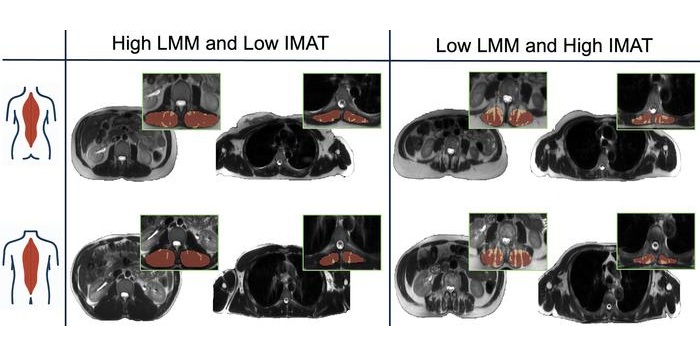
In a retrospective, cross-sectional study, 11,348 adults without known pre-existing disease underwent whole-body MRI at five imaging sites. Participants were 56.9% men with a median age of 43 years. Cardiometabolic risk factors were obtained from laboratory testing and clinical examinations collected as part of a prospective, multicenter population study.
Higher intermuscular adipose tissue was associated with significantly greater odds of hypertension, abnormal blood sugar, and unhealthy lipid patterns in both sexes after adjustment for age, sex, physical activity, and study site. Greater lean muscle mass showed a protective association against these factors only in men. Previously undiagnosed conditions were common in the cohort, including hypertension in 16.2%, abnormal blood sugar in 8.5%, and unhealthy lipid profiles in 45.9%.
Lean muscle in women remained relatively stable until ages 40 to 50 before declining, overlapping with the menopausal transition described by the researchers. Lower physical activity correlated with higher intermuscular fat and lower lean muscle. The team suggested that MRI imaging already performed for other indications could be used opportunistically to augment traditional screening by providing an imaging biomarker of cardiometabolic vulnerability. Findings were published in Radiology.
“Skeletal muscle is a major driver of metabolic health, influencing cardiovascular outcomes through multiple pathways, including glucose regulation, energy metabolism, and inflammatory responses, all of which influence cardiovascular health outcomes,” said Sebastian Ziegelmayer, M.D., associate professor and attending radiologist at Technical University of Munich.
“With MRI, we can perform much more complex analysis if we extend this to more advanced sequences. Further exploring this direction holds considerable potential, as muscle composition may not only reflect cardiometabolic health, but health in general,” said Dr. Ziegelmayer.
Related Links
Technical University of Munich