More Imaging in Patients Needing Gastric Tubes Provides Better Analysis, Reduces Complications
By MedImaging International staff writers
Posted on 30 Apr 2013
Additional computed tomography (CT) imaging scans and fluoroscopic can substantially decrease complications that occur during percutaneous radiologic gastrostomy, a procedure used for patients who require a gastric tube for nutritional support. Posted on 30 Apr 2013
“In a study of 146 patients, we saw a major complications rate of 5.9%,” said Dr. Erich Lang, of State University of New York (SUNY) Downstate Medical Center (Brooklyn, NY, US), and lead author of the study. Major complications included colonic perforation and organ injury with hemorrhage. Slight complications, such as tube leakage or dislodgement, occurred in 17.6% of patients, he reported.
“We were concerned with the high rate of complications, and we wanted to eliminate them. Topographic anatomic misjudgment appeared to be the cause for all major complications in this group of patients so we changed our technique to provide us with a better view,” said Dr. Lang. “In a follow-up study of 29 patients, we added fluoroscopy in oblique projection, cross-table lateral fluoroscopy or biplane fluoroscopy. We virtually eliminated the problem of misplacement of gastrostomy catheters. By including CT in AP [anteroposterior], lateral, and oblique projection, we’ve eliminated improper passages of entry-tracts through other organs.”
According to Dr. Lang, it is important to note that surgical gastrostomy and percutaneous endoscopic gastrostomy—two other applications for insertion of feeding tubes—have even higher rates of complications. Surgical gastrostomy has a reported 74.3% complication rate, whereas percutaneous endoscopic gastrostomy has a reported 42.9% complication rate.
Dr. Lang’s study’s findings were presented April 16, 2013, at the American Roentgen Ray Society (ARRS) annual meeting in Washington DC (USA).
Related Links:
SUNY Downstate Medical Center



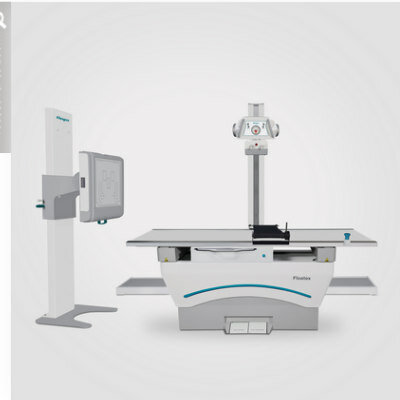

Digital Radiography System (Ceiling Free)
Digix CF Series
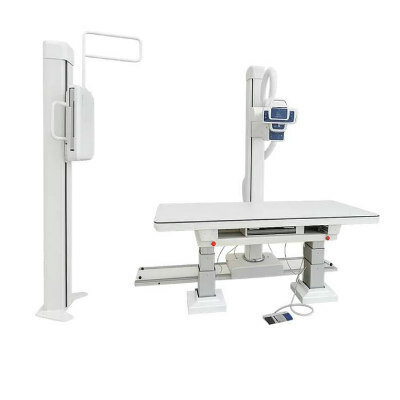

Floor‑Mounted Digital X‑Ray System
MasteRad MX30+

Ultrasound Needle Guidance System
SonoSite L25

X-Ray Illuminator
X-Ray Viewbox Illuminators