


Study Finds Less Salivary Gland Toxicity in Patients Treated with IMRT for Oropharyngeal Cancer
By MedImaging International staff writers
Posted on 07 Oct 2008
A multicenter trial testing intensity-modulated radiation therapy (IMRT) for patients with early stage oropharyngeal cancer revealed a reduction in long-term salivary toxicity while achieving good tumor control, according to new research.Posted on 07 Oct 2008
Researchers from the Radiation Therapy Oncology Group (RTOG; Philadelphia, PA, USA) presented their findings at the American Society for Therapeutic Radiology and Oncology (ASTRO) 50th Annual Meeting in Boston, MA, USA, in September 2008. RTOG, a U.S National Cancer Institute- (NCI)-funded national clinical trials group, is a clinical research component of the American College of Radiology (ACR; Restin, VA, USA).
RTOG launched its phase I/II trial, RTOG 0022, to determine whether standardized dose and target definitions for IMRT could be accomplished in a multicenter setting. Sixty-nine patients were on study from February 2001 through January 2005 from 14 academic and community institutions in the United States and Canada.
A two-year local-regional control rate of 91% and a 49% rate of acute salivary gland toxicities (grade II) were reported by investigators compared with 80% and 84% in the same patient population from the RTOG database. The rate of salivary gland toxicity dropped to 23% at one year and 13% at two years. Quantifiable patients who, at central review of their treatment plan, where found to have a major variation in their radiotherapy treatment plan had a significantly higher rate of local-regional failure than patients who were treated according to protocol (50 vs. 6%).
"This study was the work of many physicians and physicists to establish the rules for IMRT doses and quality assurance, at a time, 1999-2000, when IMRT was in its infancy and very few institutions started treating patients with it,” related Avraham Eisbruch, M.D., lead author and study chair from the University of Michigan Health Systems (Ann Arbor, MI, USA).
All institutions participating in the trial were pre-approved for IMRT by the Image-guided Therapy QA Center (ITC) at Washington University in St. Louis, MO, USA.
Related Links:
Radiation Therapy Oncology Group
American College of Radiology



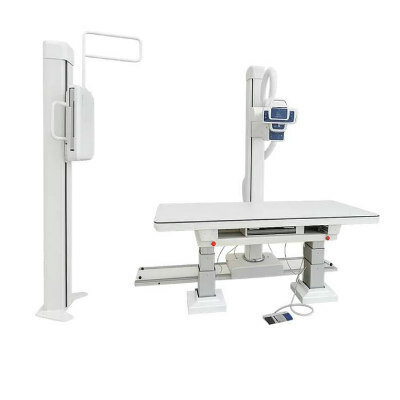

Floor‑Mounted Digital X‑Ray System
MasteRad MX30+

Digital X-Ray Detector Panel
Acuity G4


Breast Localization System
MAMMOREP LOOP

MRI System
nanoScan MRI 3T/7T