


New Material Boosts MRI Image Quality
Posted on 21 Feb 2026
Magnetic resonance imaging (MRI) is a cornerstone of modern diagnostics, yet certain deep or anatomically complex tissues, including delicate structures of the eye and orbit, remain difficult to visualize clearly. The limitation lies not in the scanner itself but in the radiofrequency hardware that transmits and receives signals. Researchers have now developed an advanced materials-based MRI antenna that strengthens signal detection, delivering clearer images in less time using existing MRI systems.
Researchers at the Max Delbrück Center (Berlin, Germany), in collaboration with Rostock University Medical Center (Rostock, Germany), redesigned conventional MRI radiofrequency coils by integrating metamaterials—engineered structures that interact with electromagnetic waves in unique ways. These materials guide radiofrequency fields more efficiently, increasing signal strength from targeted tissues, enhancing spatial resolution, and enabling faster data acquisition.
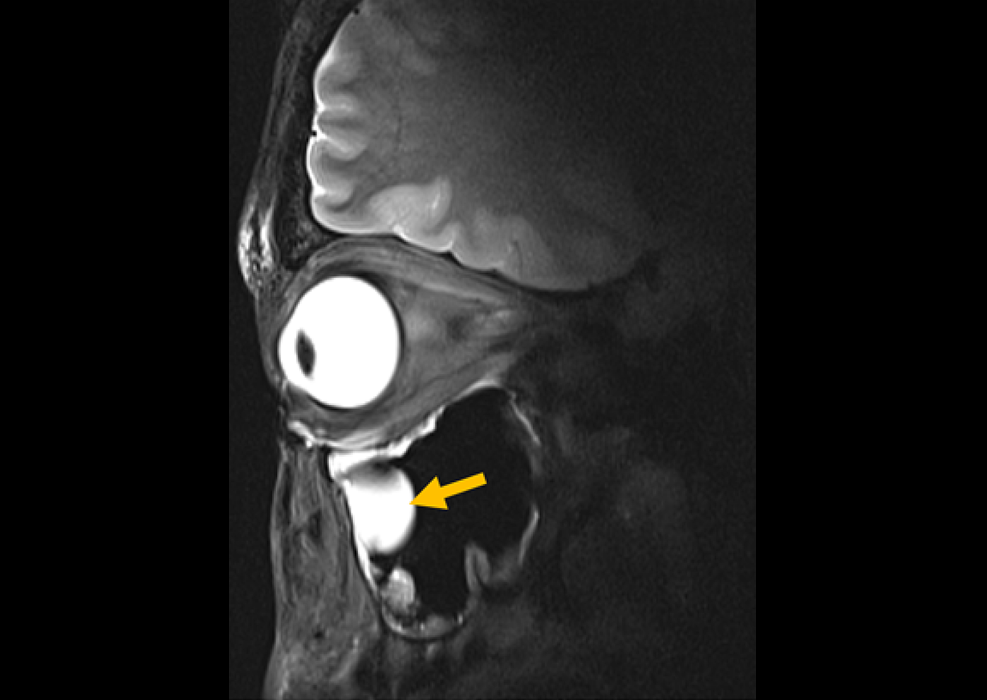
The antenna fits into existing MRI infrastructure and was validated by imaging the eye and orbit in volunteers using a 7.0 Tesla MRI system. The metamaterial-based antenna improved signal strength from deep and complex anatomical regions, producing sharper, high-resolution images while reducing scan time. Imaging tests demonstrated clearer visualization of the eye and surrounding orbital structures, areas traditionally challenging for standard RF coils.
In findings published in Advanced Materials, the system also showed potential for reducing unwanted radiofrequency heating near sensitive areas, such as medical implants, and for more precisely focusing energy during MRI-guided therapies. In addition to ophthalmology, the adaptable antenna design could be applied to other organs, including the brain, heart and kidneys, and across MRI systems operating at different magnetic field strengths.
The technology may also enhance specialized MRI scans using atoms such as sodium or fluorine, improving metabolic imaging and drug tracking. Researchers are planning multicenter studies and further adaptations of the antenna for broader clinical use, aiming to advance next-generation MRI diagnostics and therapeutic applications.
“By using concepts from metamaterials, we were able to guide radiofrequency fields more efficiently and demonstrate how advanced physics can directly improve medical imaging,” said Professor Thoralf Niendorf, senior author of the paper. “This work shows a pathway toward faster, clearer MRI scans that could benefit patients in many clinical areas.”
Related Links:
Max Delbrück Center
Rostock University Medical Center