Deep Learning Model Predicts Alzheimer’s Disease Outcomes from Baseline MRI
Posted on 22 May 2026
Alzheimer’s disease, which accounts for 60% to 70% of dementia cases worldwide, remains difficult to predict early in its course. Accurate prognostication typically relies on neuropsychological testing, multiple biomarkers, and advanced imaging, which are time-consuming and not universally accessible. Access to comprehensive cognitive assessment is a particular bottleneck. To help address this challenge, researchers have now developed an AI approach that estimates diagnosis and future cognition from a single baseline MRI scan plus demographics.
Developed at the University of California, San Francisco (UCSF), the domain knowledge–informed, multitask deep learning framework is built to derive clinically relevant outcomes from routine brain MRI. The strategy couples custom models with large pretrained networks and integrates demographic variables to estimate cognitive scores without any baseline cognitive testing. A key design element is an image model trained on related tasks—segmentation of gray matter, white matter, and cerebrospinal fluid—to overcome limitations of off‑the‑shelf systems.
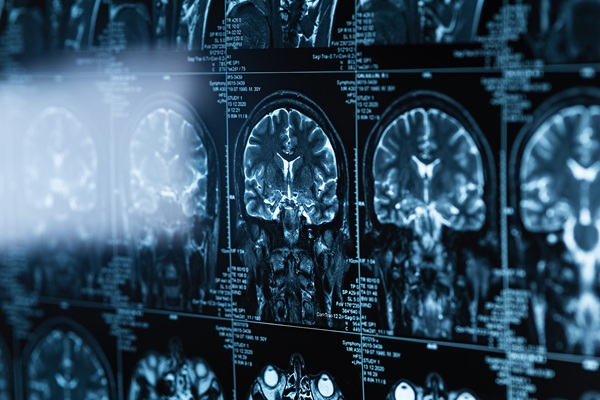
In a study published in Nature Aging on May 18, 2026, the framework outperformed existing artificial intelligence methods, including standard transfer learning. From a single baseline scan, it produced accurate, field‑leading prediction of Alzheimer’s diagnosis, high‑quality tissue segmentation, and both current and future cognitive scores. The approach minimizes reliance on specialized image pipelines, positron emission tomography, genetic testing, or fluid proteomics.
Training, testing, and validation used the Alzheimer’s Disease Neuroimaging Initiative, which provided MRI, diagnosis, demographics, and cognitive assessments. To expose the model to brains with minimal or no atrophy, the team incorporated scans from the Human Connectome Project Young Adult cohort during training. External evaluation on the Dallas Lifespan Brain Study indicated improved generalizability and robustness of the segmentation models and reduced susceptibility to segmentation errors in downstream tasks.
The authors noted potential to clarify relationships between brain morphology and cognition beyond Alzheimer’s disease, including Parkinson’s disease, amyotrophic lateral sclerosis, and Huntington’s disease. Predicting baseline cognition from minimal input could support triage in community settings and streamline enrollment by distinguishing progressors from non‑progressors, potentially reducing trial sample sizes and cost. Future iterations may integrate longitudinal MRI and PET, genetics, and blood or cerebrospinal fluid biomarkers, with real‑world adoption dependent on careful, use‑case‑specific assessment.
"The ability to correctly predict progressors from non-progressors using only baseline data can dramatically reduce sample sizes and cost. Our model may also have potential as a tool for patient selection and progression tracking in large clinical trials of disease-modifying drugs," Ashish Raj, Ph.D., UCSF professor of Radiology and Biomedical Imaging.
Related Links
UCSF