


Blood-Brain Barrier Imaging Adds Risk Insight to Standard Stroke MRI
Posted on 13 May 2026
Acute ischemic stroke requires fast, precise decisions on reperfusion and bleeding risk, yet routine imaging gives limited insight into vascular integrity. Clinicians need ways to predict outcomes and tailor therapy in time-critical settings. Blood–brain barrier failure, a marker of tissue injury and inflammation, has been difficult to visualize in everyday practice. To help address this challenge, researchers have developed “blood-brain core” or “leaky core” information derived from existing magnetic resonance imaging (MRI) data to individualize stroke care.
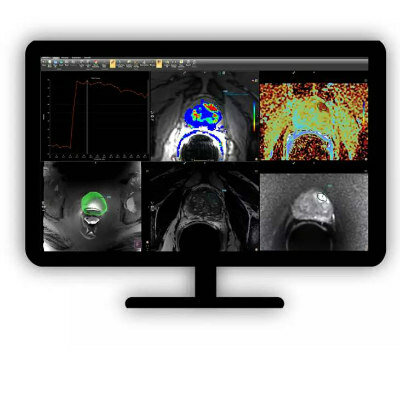
Blood-brain core imaging is an algorithmic method developed through a multi-institutional collaboration involving the Johns Hopkins University School of Medicine. The approach quantifies blood-brain barrier disruption on standard post-stroke MRI by analyzing a sequence already acquired in many acute scans. It calculates the extent of vascular leakage within affected brain regions, producing an index that captures permeability changes linked to injury and inflammation and may indicate heightened risk for post-ischemic hemorrhage.
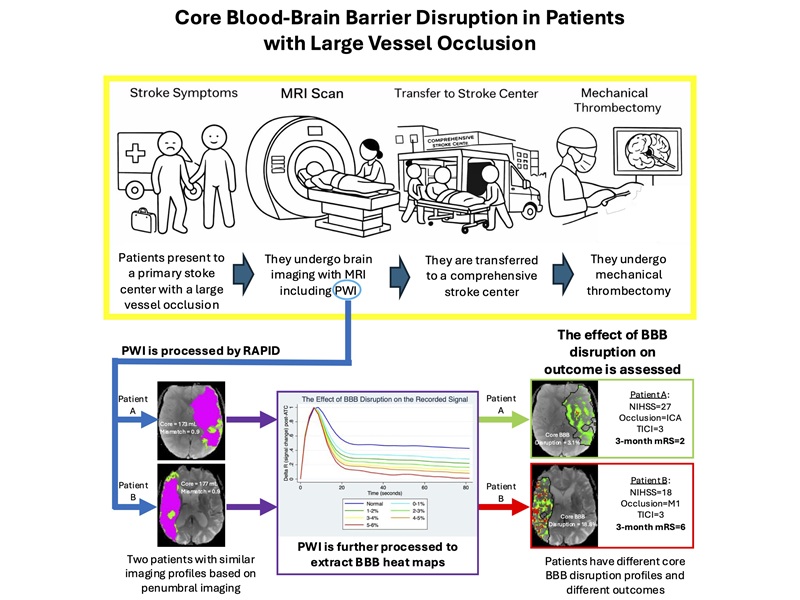
In a review of 291 post-stroke brain scans by researchers from France, the U.S., and Spain, the team localized areas of blood–brain barrier disruption and linked them to outcomes. For every 1% increase in disruption measured by the index, the odds of a poor outcome at three months after ischemic stroke rose by 16%. The study, titled “Core Blood-Brain Barrier Disruption in Patients With Large Vessel Occlusion,” was published in Stroke.
Applied clinically, the imaging may refine therapy selection and sequencing. Patients with evidence of leakage may still be eligible for mechanical thrombectomy, while clinicians withhold blood thinners or forego clot‑dissolving medication after the procedure to limit bleeding risk. Conversely, patients who appear unlikely to benefit on conventional imaging but show intact vessels on leaky core imaging could receive treatment, potentially expanding access to interventions previously considered unsuitable.
Beyond acute decision-making, the method could streamline targeted clinical trials by identifying therapies that preserve the blood–brain barrier using fewer resources. It may also help monitor patients after stroke who face elevated risks of a second stroke or dementia, enabling earlier opportunities to intervene. Because the algorithm leverages MRI sequences already collected in standard scans, it can be computed from existing data without additional image acquisition, adding actionable information to personalize care.
"We are constantly advancing our stroke prevention strategies, our acute stroke treatments, our post-stroke management and our stroke rehabilitation options," says Richard Leigh, M.D., the first study author, a neurologist and the director of the Johns Hopkins Neuro Vascular Brain Imaging Laboratory. "It is likely that imaging the blood-brain barrier, which is itself a marker of brain health, can help us improve all of these interventions."
Related Links
Johns Hopkins University School of Medicine