AI-Guided Mammogram Triage Speeds Same-Day Breast Cancer Workup
Posted on 10 Jun 2026
Abnormal findings on screening mammograms can leave women waiting weeks for answers, prolonging anxiety and delaying care. These delays can strain diagnostic services, particularly in safety-net hospitals, and postpone biopsies for patients who ultimately have cancer. A newly introduced artificial intelligence (AI)–guided triage workflow prioritizes patients most likely to have disease for immediate workup. Researchers have now shown that this approach can shorten the diagnostic pathway to a single day for selected high-risk patients..
Investigators at the University of California, San Francisco (UCSF) and the University of California, Berkeley used Mirai, an open-source AI model, to stratify risk directly from screening mammograms. Launched at Zuckerberg San Francisco General Hospital and Trauma Center, the program moves high-risk patients from screening to targeted diagnostic imaging and, when indicated, to biopsy on the same day.
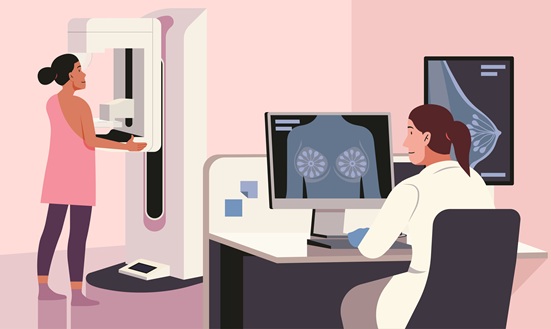
Mirai was trained on hundreds of thousands of mammograms paired with cancer outcomes to recognize subtle patterns on screening studies and estimate near‑term risk. Clinicians then use that score to triage patients for accelerated evaluation without replacing radiologist interpretation or making autonomous diagnoses. The intent is to direct limited same‑day diagnostic capacity to those most likely to benefit.
Before deployment, the team analyzed more than 114,000 archival mammograms to tune thresholds that would capture enough high‑risk cases without overwhelming the clinic. In prospective use on more than 4,100 screening mammograms, Mirai designated 525 women, or 12.7%, as high risk. Those patients received immediate readouts and same‑day diagnostic imaging for suspicious findings, and some underwent biopsy the same day.
The approach shortened the wait for diagnostic evaluation from several weeks to about an hour. Among women ultimately diagnosed with breast cancer, the average time to biopsy dropped from more than two months to fewer than 10 days. Findings were published in npj Digital Medicine in Msy 18, 2026, with contributions from UCSF and UC Berkeley.
“This is really an exciting time. This moves us closer to personalized care, where we can tailor a plan so that each patient gets the right intervention at the right time,” said Maggie Chung, MD, first author of the study.
“This is a powerful example of how AI can be a collaborative partner for physicians. It shows how we can improve care when we bring clinicians and data scientists together to design these systems,” said Adam Yala, Ph.D., assistant professor in the UCSF‑UC Berkeley Joint Program in Computational Precision Health.
Related Links
UCSF
UCSF‑UC Berkeley Joint Program in Computational Precision Health