Portable MRI System Accelerates Emergency Brain Imaging and Triage
Posted on 28 May 2026
Emergency departments frequently face delays accessing conventional magnetic resonance imaging (MRI) for patients with suspected neurological emergencies. Such waits can slow triage, prolong boarding, and defer time-sensitive decisions. Bedside imaging that safely acquires diagnostic brain images without transporting unstable patients is an ongoing operational need. A new portable MRI system now offers rapid, on-unit brain scanning that significantly shortens order-to-scan time in the emergency setting, based on randomized data.
Hyperfine (Guilford, CT, USA) announced results from the PRIME (Portable Rapid Imaging for Medical Emergencies) study, which evaluated the company’s Model 2 Swoop portable MRI system powered by Optive artificial intelligence (AI) software. Presented at the Society for Academic Emergency Medicine (SAEM) 2026 Annual Meeting, the study assessed the system’s use in neurological emergencies and its impact on emergency department (ED) workflow. Investigators examined whether rapid bedside brain imaging could support triage decisions across a broad range of acute neurological conditions.
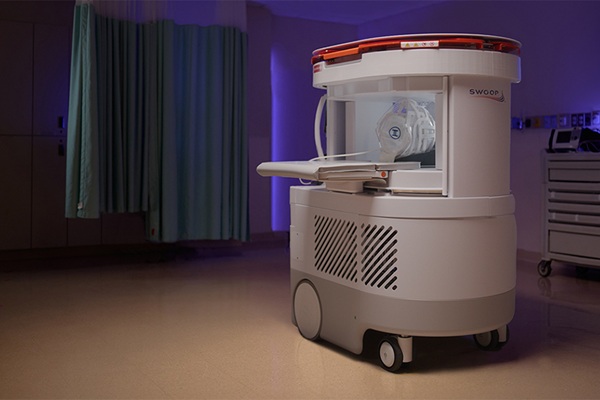
The Swoop platform is a portable, ultra-low-field MRI device intended for bedside use to produce images of the head when a full diagnostic examination is not clinically practical. The systems are U.S. Food and Drug Administration (FDA) cleared for brain imaging of patients of all ages. When interpreted by a trained physician, the images provide information that can be useful in determining a diagnosis.
PRIME was a single-center, prospective, randomized controlled trial conducted in a tertiary ED that enrolled 100 participants. Standard clinical workflow using conventional MRI was compared with a care pathway incorporating bedside portable MRI. The trial was designed to evaluate effectiveness and efficiency endpoints relevant to ED triage in neurological emergencies.
Results showed a substantial reduction in time to imaging in the portable MRI arm. Median time from imaging order to scan start was 1.28 hours with portable MRI compared with 7.76 hours using conventional MRI alone, a median difference of 6.35 hours. Critical pathology was identified in 18.6% of completed scans—including acute ischemic stroke, mass lesions, mass effect, and hydrocephalus—all detected by portable MRI and confirmed on conventional MRI.
The findings add to a growing evidence base for portable MRI as an adjunct to emergency neuroimaging and suggest potential benefits for ED workflow and patient throughput. Enrollment in the trial was rapid, reflecting the frequency with which MRI serves as a triage tool in emergency care.
“These findings suggest that portable MRI can be integrated into emergency department workflow far more quickly than conventional MRI and can provide clinically meaningful information when time matters most. By bringing advanced imaging to the bedside, portable MRI has the potential to improve diagnostic efficiency, reduce delays, and support faster treatment decisions for patients with neurological emergencies,” said Dr. Charles Wira, Associate Professor of Emergency Medicine at Yale University.
“Portable MRI also has the potential to meaningfully reduce emergency department boarding by helping to alleviate delays associated with waiting for access to conventional MRI. Reducing imaging-related bottlenecks may help ED teams move patients through care pathways more efficiently while maintaining access to advanced neuroimaging,” said Dr. Kevin Sheth, Professor of Neurology and Neurosurgery at the Yale School of Medicine and principal investigator for the PRIME study.