New Brain Stimulation Approach Targets Deep Brain Areas Without Surgery
Posted on 08 Apr 2026
Noninvasive modulation of deep brain structures remains a major hurdle for treating disorders tied to memory and emotion. The hippocampus is crucial to these functions, yet its depth has limited precise, nonsurgical access. Conditions such as Alzheimer’s disease, depression, anxiety, and post-traumatic stress disorder (PTSD) are linked to hippocampal dysfunction, underscoring the need for targeted therapies. Researchers have now demonstrated a personalized transcranial magnetic stimulation approach that reliably engages the hippocampus without surgery or medication.
Neuroscientists at University of Iowa Health Care tested whether transcranial magnetic stimulation (TMS) can activate and modulate hippocampal activity in humans. The team used concurrent stimulation and recording in people to obtain direct evidence of hippocampal engagement. This work provides a mechanistic path for circuit-based neuromodulation centered on an individualized connectivity map.
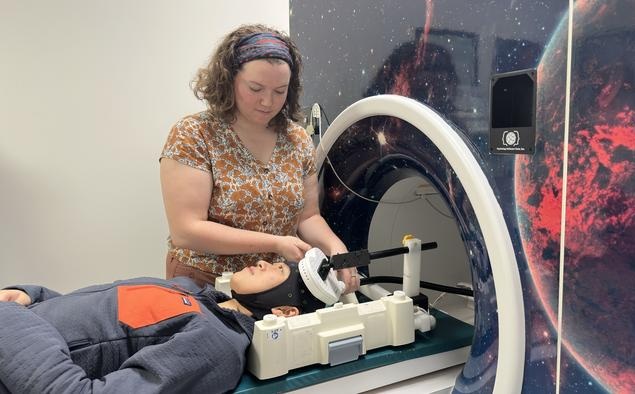
The investigators studied eight neurosurgical patients with implanted hippocampal electrodes, enabling simultaneous TMS and intracranial electroencephalography. In four patients, the stimulation site was personalized using each individual’s resting‑state functional magnetic resonance imaging connectivity to identify a cortical target most strongly linked to the hippocampus. Stimulation of these individualized sites, using either single‑pulse TMS or repetitive TMS that is widely used clinically, produced evident hippocampal activity changes. In the four patients without connectivity‑guided targeting, no robust hippocampal activity changes were observed.
A complementary noninvasive experiment combined TMS with functional magnetic resonance imaging in 79 neurologically healthy participants. Although targets were not personalized in this cohort, the strength of TMS‑evoked hippocampal responses correlated with how strongly the actual stimulation site was functionally connected to the hippocampus and with its proximity to the individualized site predicted by connectivity mapping. These convergent data support connectivity‑guided TMS as a strategy to enhance reliability and magnitude of hippocampal modulation.
The study appears in Nature Communications, published online on March 8, 2026. The article is titled “Multimodal evidence for hippocampal engagement and modulation by functional connectivity‑guided parietal TMS.” Collaborators included Alto Neuroscience.
“The idea of manipulating neural activity in the hippocampus to help treat these types of conditions is appealing, but because the hippocampus lies so deep inside the brain, the challenge is how to engage these brain cells without using invasive implants or drugs that are not precisely targeted,” said Jing Jiang, PhD, assistant professor of pediatrics at University of Iowa Health Care. “These first-of-their-kind findings establish a foundation for a safer, noninvasive, and personalized neuromodulation approach to target hippocampus-dependent functions and could potentially lead to new understanding of and new ways to treat these conditions.”
Related Links
University of Iowa Health Care