


MRI-Derived Biomarker Improves Risk Stratification in Glioblastoma
Posted on 06 Apr 2026
Glioblastoma is marked by rapid growth and diffuse infiltration that complicate prognosis and treatment planning. Clinicians need objective tools that capture both how these tumors expand and how they affect surrounding brain tissue. Researchers now report an imaging-derived biomarker that quantifies these dynamics to refine risk assessment. The approach is intended to support earlier, more precise stratification of patients with aggressive disease.
The Dynamic Infiltration Rate (DIR) is a biomarker developed by the Biomedical Data Science Laboratory at the ITACA Institute of the Universitat Politècnica de València. DIR is derived from magnetic resonance imaging (MRI) and is designed to characterize tumor behavior beyond size measurements. It aims to identify growth patterns that relate to tumor aggressiveness and to provide prognostic information that is independent of conventional volumetric tracking.
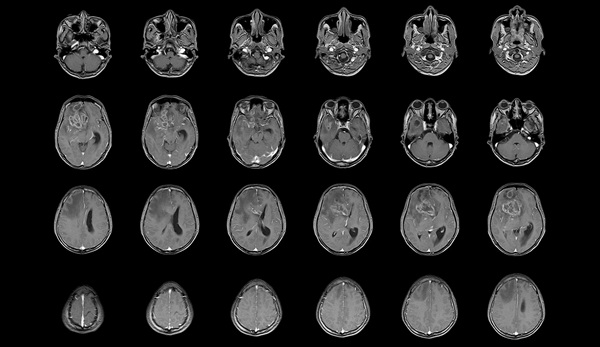
The method combines longitudinal MRI–based volumetric growth with estimates of the mechanical impact of the tumor on adjacent brain tissue. Investigators generate tissue compression maps from serial imaging to evaluate whether a lesion primarily compresses nearby structures or infiltrates parenchyma without marked compression. DIR integrates these elements to distinguish more proliferative, compressive tumors from more infiltrative, expansion-dominant tumors. This framework links biomechanical effects with observed growth trajectories to yield a single index for clinical interpretation.
Validation used synthetic data and two international clinical cohorts of patients with glioblastoma. The biomarker enabled robust stratification of patients by prognosis. Reported outcomes showed that individuals with low DIR values had an average survival of 35.2 weeks compared with 16.0 weeks among those with high values. The findings were published in Medical Physics and involved collaboration with Oslo University Hospital.
The authors state that the biomarker is quantitative, reproducible, and non-invasive because it relies solely on standard medical imaging. They indicate that the approach could facilitate more personalized care by aligning therapeutic strategies and follow-up protocols with each tumor’s growth pattern. These attributes may help integrate DIR into settings where MRI is routinely available.
“Until now, assessment methods have mainly been based on measuring the increase in tumor size or the displacement of brain structures, without adequately capturing how the tumor grows or its biomechanical impact on the surrounding brain,” said Carles López Mateu, lead author of the study at the Biomedical Data Science Laboratory, ITACA Institute, Universitat Politècnica de València. "This index allows us to characterize the biological behavior of the tumor beyond its size and provides key information on its aggressiveness."
Related Links
ITACA Institute of the Universitat Politècnica de València