Ultra-Detailed Brain Atlas Enhances Early Detection of Neurological Disorders
Posted on 27 Mar 2026
Precise localization of small and deep brain structures remains a hurdle for radiology and neurosurgical planning. Limited resolution in many magnetic resonance imaging atlases constrains segmentation and morphologic assessment, which can impede early detection of neurodegenerative disease.
To help address this challenge, an international team has produced a comprehensive, ultra-high-resolution structural atlas of the human brain. The resource is intended to support earlier and more precise evaluation of conditions such as Alzheimer’s disease and Parkinson’s disease.
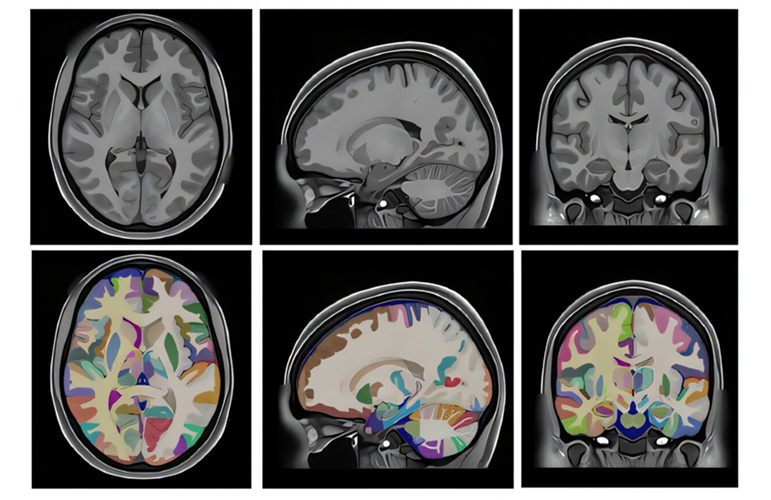
HoliAtlas, developed by the ITACA Institute at the Universitat Politècnica de València (UPV; Valencia, Spain), is designed to serve as a detailed reference map for research and clinical workflows. The atlas enables consistent identification of deep structures and supports automated segmentation and refined morphologic analysis. It is positioned to integrate multimodal data and standardize comparisons across studies and populations.
The atlas is built from ultra-high-resolution, multimodal magnetic resonance imaging (MRI) that surpasses the detail of existing MRI-based atlases. Reported spatial resolution improves from the approximately 1 mm³ typical of prior MRI atlases to 0.125 mm³, allowing visualization of much smaller and more complex anatomical features. These gains are relevant to surgical planning and to analyses that seek to detect subtle structural changes associated with neurological disease.
Construction of HoliAtlas relied on brain images from 75 healthy volunteers drawn from the Human Connectome Project. Investigators applied advanced processing and normalization to generate an average brain model. At its most detailed level, the atlas delineates up to 350 anatomical regions by integrating seven segmentation protocols. The workflow combines neuroanatomical analysis tools, artificial intelligence algorithms, and expert manual corrections.
The work was led by ITACA’s MIALAB group with contributions from international partners including CNRS and the University of Bordeaux, alongside other Spanish and European centers. The study was published in Scientific Reports in 2026.
“Until now, most MRI-based atlases had an approximate resolution of 1 mm³. The new atlas reaches a resolution of 0.125 mm³, allowing observation of much smaller and more complex brain structures,” notes Sergio Morell, researcher in the MIA-LAB group at ITACA and co-author of the study.
"At its most detailed level, the atlas includes up to 350 anatomical regions obtained by integrating seven different segmentation protocols, combining neuroanatomical analysis tools, artificial intelligence algorithms, and manual corrections by experts," said Morell.
Related Links
ITACA Institute at UPV