


Radiosurgery Improves QOL for Patients with Facial Pain
By MedImaging International staff writers
Posted on 13 Jul 2017
A new study suggests that stereotactic radiosurgery (SRS) can improve the quality of life (QOL) of patients with trigeminal neuralgia and also reduce their depression.Posted on 13 Jul 2017
Researchers at Case Western Reserve University (CWRU; Cleveland, OH, USA) and the Cleveland Clinic (CC; OH, USA) conducted a study in 50 patients with TN treated with SRS. The researchers prospectively collected EuroQOL 5-Dimension (EQ-5D) and Patient Health Questionnaire 9 (PHQ-9) data before and after the procedure, and pain response and treatment-related facial numbness were classified using Barrow Neurological Institute (BNI) scales. The patients’ answers were analyzed before treatment and at each follow-up appointment.
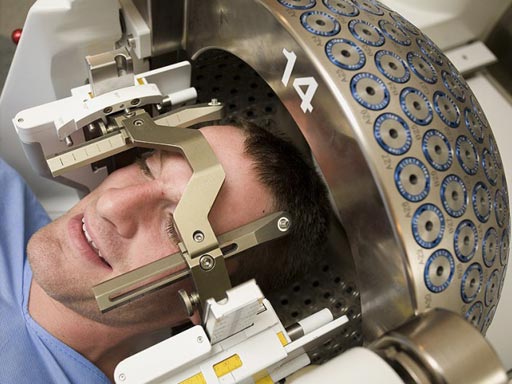
Image: A new study suggests SRS can help relieve trigeminal neuralgia (Photo courtesy of DioMedia).
The results showed that following SRS, 12-month freedom from pain was 92%, while 12-month freedom from facial numbness was 89%. Significant improvements in the EQ-5D index and PHQ-9 were observed. At 12 months following SRS, the actuarial rates of improvements in EQ-5D, and PHQ-9 were 55% and 59%, respectively. Overall, patients reported improved QOL and lower rates of depression after SRS. The benefit of treatment was strongly driven by improvements in pain and discomfort, as well as self-care.
“People go and see their neurologist and get the pain under control with medication, but they don’t realize how lousy this can make them feel. Pain and the medication to stop the pain make it difficult for people with TN to go outside and live life,” said corresponding author Samuel Chao, MD, of CC. “With radiosurgery, we can reduce pain, improve quality of life and decrease depression; people can go out and enjoy life without worrying they will have a random attack. Giving options empowers the patient to be more aware of themselves and manage their own condition.”
Trigeminal neuralgia, also called tic douloureux, is a chronic pain condition that affects the trigeminal (5th) cranial nerve, one of the most widely distributed nerves in the head. Typical Type 1 neuropathic pain causes extreme, sporadic, sudden burning or shock-like facial pain that lasts anywhere from a few seconds to as long as two minutes per episode. The atypical form, Type 2, is characterized by constant aching, burning, stabbing pain of somewhat lower intensity. Both forms of pain may occur in the same person, sometimes at the same time.
Related Links:
Case Western Reserve University
Cleveland Clinic




Digital Color Doppler Ultrasound System
MS22Plus

Biopsy Software
Affirm® Contrast

Pocket Fetal Doppler
CONTEC10C/CL


Adjustable Mobile Barrier
M-458