


DTI Brain Scan Detects Earliest Signs of Alzheimer's
By MedImaging International staff writers
Posted on 26 Jan 2010
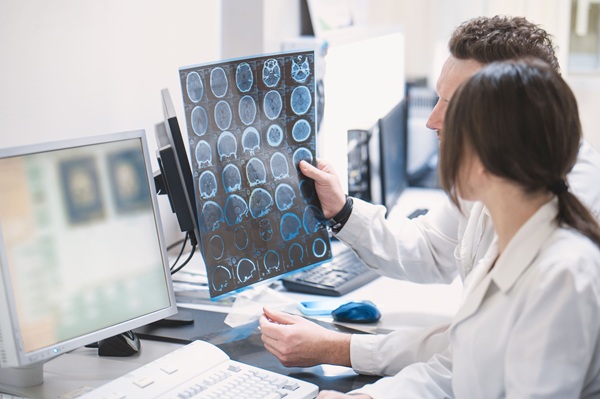
A new type of brain scan, called diffusion tensor imaging (DTI), appears to be better at detecting whether an individual with memory loss might have brain changes of Alzheimer's disease (AD). Posted on 26 Jan 2010
The study's findings were published in the January 6, 2010, online issue of the journal Neurology, the medical journal of the American Academy of Neurology. "As better medicines for Alzheimer's disease become available, it will be important to identify people at high risk for the disease as early and accurately as possible so treatment can be most effective,” said Norbert Schuff, Ph.D., with the University of California, San Francisco (UCSF; USA) and the Veterans Affairs Medical Center, San Francisco, author of an editorial about the research.
For the study, 76 healthy people in Rome (Italy) aged 20 to 80 underwent DTI-magnetic resonance imaging (MRI) brain scanning, which is more sensitive than conventional MRI for detecting changes in brain chemistry, thereby mapping fiber tracts that connect brain regions. The researchers examined MRI-DTI changes in the hippocampus, a region of the brain that is critical to memory and one that is involved in AD.
Participants were given verbal tests and tests that measured visual perception of space between objects. Scientists compared the brain scans and found that changes in DTI imaging better clarified declines in memory than did measuring hippocampus volume through a traditional MRI scan. They found that mean diffusivity in the hippocampus better predicted verbal and spatial memory performance in the participants, especially in those who were 50 years of age, or older.
"Our findings show this type of brain scan appears to be a better way to measure how healthy the brain is in people who are experiencing memory loss. This might help doctors when trying to differentiate between normal aging and diseases like Alzheimer's,” said study author Giovanni Carlesimo, Ph.D., from Tor Vergata University (Rome, Italy). "DTI, along with MRI, could serve as an important tool in understanding how and why a person experiences memory decline.”
Related Links:
University of California, San Francisco
Tor Vergata University




Biopsy Software
Affirm® Contrast
 Guided Devices.jpg)

Ultrasound-Guided Biopsy & Visualization Tools
Endoscopic Ultrasound (EUS) Guided Devices

Floor‑Mounted Digital X‑Ray System
MasteRad MX30+

Digital Color Doppler Ultrasound System
MS22Plus