


MRI Best for Assessment of Metastasis and Response for Image-Guided Cervical Cancer Brachytherapy
By MedImaging International staff writers
Posted on 13 Oct 2008
The treatment of choice for patients with locally advanced cervical cancer is a combination of external beam radiation therapy (EBRT), concomitant chemotherapy, and brachytherapy (BT). An image-guided brachytherapy (IGBT) approach using magnetic resonance imaging (MRI) is becoming state-of-the-art for the BT component of this treatment, according to Austrian researchers. It increases the probability of cure and decreases side effects, due to dose escalation and organ sparing.Posted on 13 Oct 2008
Successful dose delivery needs appropriate placement of the brachytherapy applicators within the shrinking target and precise definition of the target structure. Both require the comprehensive understanding of tumor spread and pattern of tumor response using MRI during EBRT. To date, no MRI tumor classification for locally advanced cervical cancer has been developed to improve this understanding.
In this study, the MRI findings at diagnosis and at the time of brachytherapy were analyzed for 100 patients by researchers from the Medical University of Vienna (Austria). They defined five different subgroups for initial parametrial tumor spread (GTV [gross tumor volume] diagnosis) based on the predominant growth pattern and extent of invasion.
The analysis of the quality and extent of the corresponding remnants (GTV brachytherapy or "gray zones") at the time of IGBT, demonstrated that for each subgroup a typical response pattern was to be expected. Finally, listings with the respective frequencies and topographic distribution are presented.
Based on this systematic MRI evaluation, it is possible to define five subgroups of initial tumor spread and to describe the extent, quality, and topography of remnants, according to the investigators. Now it is practical to accurately define the target within the frame of adaptive radiotherapy, and in particular, IGBT. Using this adaptive target approach, these findings are also valuable for the development of novel combined intracavitary and interstitial BT applicators and BT application techniques.
Dr. Dimopoulos Johannes, from the Medical University of Vienna, presented the study's findings at ESTRO 27 (European Society for Therapeutic Radiology and Oncology), held September 2008 in Gothenburg [Göteborg], Sweden.
Related Links:
Medical University of Vienna




Digital Radiography System
DR-300

Digital Color Doppler Ultrasound System
MS22Plus


Digital Radiographic System
OMNERA 300M
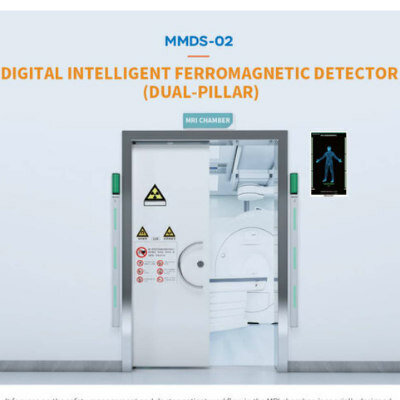

Digital Intelligent Ferromagnetic Detector
Digital Ferromagnetic Detector