


New SPECT/CT Method Differentiates Inflammation from Fibrosis in Interstitial Lung Disease
Posted on 09 Jun 2026
Interstitial lung disease (ILD) encompasses more than 200 disorders that inflame or scar the lung interstitium and can lead to progressive respiratory failure. Determining whether active inflammation is present is essential because anti-inflammatory drugs may benefit some patients while exposing others to unnecessary risk. Conventional imaging depicts scarring but struggles to distinguish inflammatory activity. To help address this challenge, investigators have presented a single-photon emission computed tomography/computed tomography (SPECT/CT) method that differentiates inflammation from fibrosis in ILD.
At the Society of Nuclear Medicine and Molecular Imaging (SNMMI) 2026 Annual Meeting, researchers presented data on SPECT/CT with the molecular imaging agent ⁹⁹ᵐTc-maraciclatide for ILD. The approach uses the radiotracer to visualize formation of new blood vessels, a hallmark of inflammatory disease.
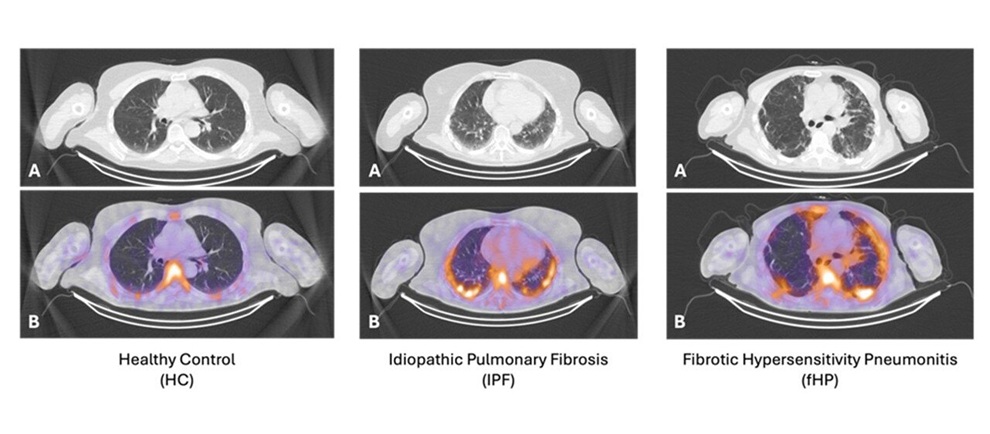
In the study, 15 participants underwent ⁹⁹ᵐTc-maraciclatide SPECT/CT: five with idiopathic pulmonary fibrosis, five with fibrotic hypersensitivity pneumonitis, and five healthy controls. Nuclear medicine physicians and thoracic radiologists interpreted scans using radiologic patterns. Quantitative analysis incorporated standardized uptake values and target-to-background ratios.
Healthy controls showed minimal tracer uptake in the lungs. Both ILD cohorts demonstrated distinct uptake compared with controls. Target-to-background ratios were numerically higher in the disease groups, supporting the technique’s ability to indicate inflammatory activity separate from established fibrotic change.
A larger Phase 3 study is required before the method can be used clinically. The tracer has received U.S. Food and Drug Administration Fast Track designation for imaging ILD. If a Phase 3 trial is initiated, the technology could become available to patients within two years.
“We saw during the COVID-19 pandemic—when all patients with the infection had inflammation—that anti-inflammatory treatments were highly effective. While current imaging techniques can provide a structural view of fibrosis in the lungs, there is no reliable, non-invasive way to identify inflammation. A tool that could detect inflammation in ILD patients could help pinpoint those most likely to respond to anti-inflammatory therapy,” said Druin Burch, consultant physician at John Radcliffe Hospital in Oxford, United Kingdom.
Related Links
SNMMI
John Radcliffe Hospital