


GE HealthCare Showcases AI-Enabled Nuclear Medicine Portfolio at SNMMI 2026
Posted on 05 Jun 2026
Nuclear medicine is expanding rapidly as health systems adopt theranostics and broaden access to radiopharmaceuticals, increasing demand for scalable operations and consistent diagnostic confidence. At the same time, providers are seeking more standardized, quantitative imaging to support therapy planning and treatment monitoring. New care models depend on efficient workflows and reliable interpretation, driving interest in AI-enabled imaging systems, software, and radiopharmaceutical solutions designed to streamline workflows and expand access to nuclear medicine services.
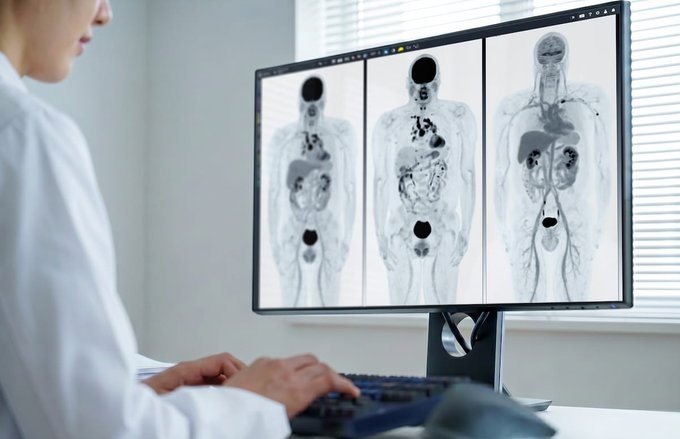
GE HealthCare (Chicago, IL, USA) showcased an integrated portfolio at the 2026 Society of Nuclear Medicine and Molecular Imaging (SNMMI) Annual Meeting to support precision care across nuclear medicine workflows. The lineup included MIM KineticID, a 510(k)-pending software for dynamic PET imaging and kinetic modeling, and MIM LesionID Pro, an AI-powered application recently cleared by the U.S. Food and Drug Administration (FDA) that automates whole-body tumor burden analysis.
The advanced imaging portfolio also featured the Omni Legend PET/CT system with high-sensitivity imaging and Precision DL deep learning reconstruction, the StarGuide digital SPECT/CT platform with 12 cadmium zinc telluride (CZT) detectors optimized for selected theranostic applications, and the MINItrace Magni compact cyclotron for onsite production of PET tracers and radiometals, including gallium-68.
GE HealthCare also highlighted radiopharmaceuticals and imaging agents spanning cardiology, neurology, and oncology. Flyrcado (flurpiridaz F 18) is indicated for PET myocardial perfusion imaging under rest or stress in adults with known or suspected coronary artery disease. Vizamyl (flutemetamol F 18) estimates amyloid beta neuritic plaque density in adults with cognitive impairment, supported by quantitative tools such as MIMneuro.
The portfolio also included DaTscan (ioflupane I-123), which visualizes striatal dopamine transporters to help evaluate suspected Parkinsonian syndromes or dementia with Lewy bodies, and Cerianna (fluoroestradiol F 18), which detects estrogen receptor–positive lesions as an adjunct to biopsy in recurrent or metastatic breast cancer. GE HealthCare also outlined its Adaptive Theranostics model, integrating molecular imaging, quantitative analytics, and connected workflows to help personalize radioligand therapy decisions over time.
“This is an exciting moment for nuclear medicine because we are moving beyond simply detecting disease to truly understanding its biology and behavior. Technologies that combine advanced imaging, quantitative analysis and innovative radiopharmaceuticals are helping clinicians make more informed decisions earlier in the care pathway – ultimately improving how we diagnose, treat and monitor patients,” said Dr. Munir Ghesani, MD, FACNM, FACR, FSNMMI, Chief Medical Officer at United Theranostics and System Chief of Nuclear Medicine at the Mount Sinai Health System in New York.
“As molecular imaging continues to scale, success will depend on more than individual products – it requires building the ecosystem around them. We’re focused on enabling that ecosystem end-to-end – from tracer development and manufacturing to expanding access, integrating workflows and advancing the tools that support confident, consistent decision-making – so precision care can move from promise to sustained, everyday practice,” said Eric Ruedinger, Vice President and General Manager, Pharmaceutical Diagnostics (PDx), USCAN, GE HealthCare.