3D Brain Imaging Marker Predicts Surgical Outcomes in Dementia-Causing Hydrocephalus
Posted on 21 Apr 2026
Idiopathic normal pressure hydrocephalus (iNPH) is an underdiagnosed cause of gait disturbance, urinary symptoms, and cognitive decline in older adults. Cerebrospinal fluid shunt surgery can alleviate or even reverse symptoms, yet many patients do not benefit after an invasive procedure. Imaging supports diagnosis, but existing markers offer limited prognostic value for surgical response. Researchers have now developed a three-dimensional ventricular marker to better predict postoperative benefit and guide patient selection.
Researchers at the University of Eastern Finland have identified a novel three-dimensional marker of the brain ventricles for iNPH, termed asphericity. The marker characterizes ventricular geometry to indicate which patients are likely to benefit from shunt surgery. It addresses a long-standing need for tools that move beyond diagnosis to predict treatment response.
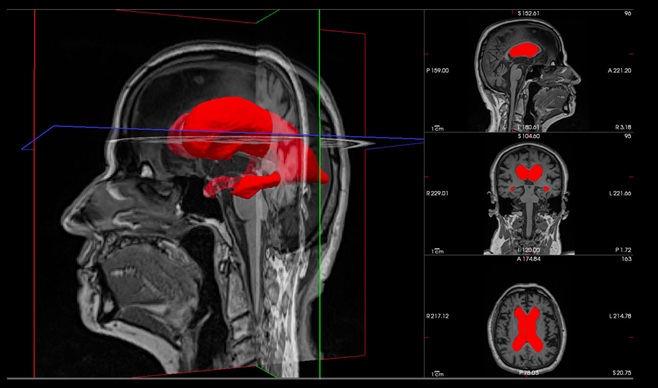
In the study, advanced three-dimensional imaging and machine learning were used to quantify and analyze features of the lateral ventricles. The approach derives a geometric profile from brain scans and relates it to surgical outcomes. By focusing on ventricular shape characteristics, it provides a structured method for anticipating postoperative benefit.
The analysis included brain scans from 170 patients with idiopathic normal pressure hydrocephalus. Among the computed measures, ventricular asphericity showed a strong association with better outcomes after shunt placement. These findings suggest that ventricular geometry can stratify patients by expected response and reduce exposure to ineffective procedures.
The work is published in Fluids and Barriers of the CNS. It underscores the central role of neuroimaging in candidate selection for complex brain surgery. It also highlights the potential for quantitative, three-dimensional metrics to refine surgical decision-making in iNPH.
“Our findings suggest that quantifying the 3D geometry of the brain ventricles can provide important clues about which patients are likely to benefit from surgery. This advancement brings us a step closer to better identifying iNPH patients who will truly benefit from complex brain surgery and sparing many from the suffering of ineffective treatment.” said the study’s lead author, Andrius Penkauskas, Doctoral Researcher at the University of Eastern Finland.
Related Links
University of Eastern Finland