


Reusable Gel Pad Made from Tamarind Seed Could Transform Ultrasound Examinations
Posted on 27 Feb 2026
Ultrasound imaging depends on a conductive gel to eliminate air between the probe and the skin so sound waves can pass clearly into the body. While the imaging technology is fast, safe, and noninvasive, the liquid gel is often inconvenient. It can feel cold and sticky, cling to body hair, dry out during longer scans, and require cleanup afterward. Researchers have now developed a solid, self-moisturizing ultrasound gel pad that maintains image quality while improving comfort and convenience.
Researchers at Kindai University (Osaka, Japan) have created a flexible, solid gel pad made primarily from tamarind seed gum, a natural polysaccharide extracted from tamarind seeds, combined with glycerin, water, and preservatives. Measuring roughly 50 millimeters square and five millimeters thick, the pad behaves like a flexible solid rather than a viscous liquid. Its formulation ensures that the storage modulus remains greater than the loss modulus across clinical temperatures, making it firm enough to handle while flexible enough to conform to skin contours. Unlike earlier solid gels, it slowly releases moisture through syneresis, maintaining acoustic contact during prolonged examinations.
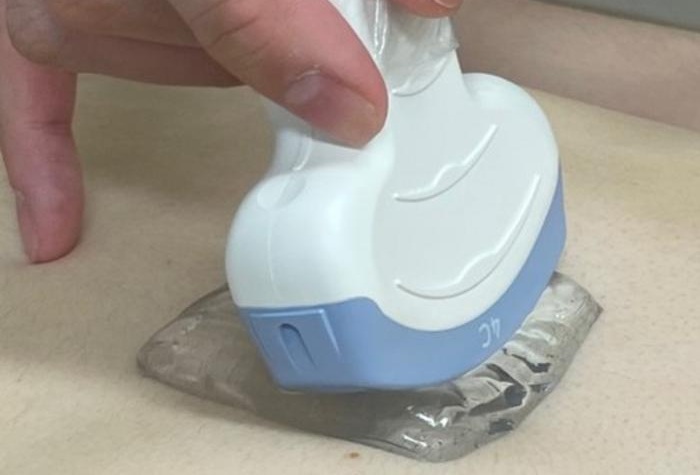
In tests lasting up to an hour, the gel pad showed no drying and no degradation in ultrasound image quality. Conventional liquid gels typically begin drying after about 15 minutes, potentially compromising image clarity during extended scans. The feasibility pilot study evaluated the gel across various probes, tissue types, and depths. Volunteers reported that the solid pad was easier to remove, did not cling to hair, and eliminated the need for post-scan cleaning.
By gradually releasing approximately 25 percent of its fluid over an hour, the pad keeps the skin interface moist without becoming messy. The researchers estimate that once cleaning time, preparation, and waste are considered, production costs could be comparable to traditional gel usage. Although the findings published in Scientific Reports are preliminary, the results suggest the pad could improve patient comfort and workflow efficiency in clinics worldwide. Larger clinical trials and cost-effectiveness analyses will be necessary before widespread adoption.
Related Links:
Kindai University