Imaging Technique Generates Simultaneous 3D Color Images of Soft-Tissue Structure and Vasculature
Posted on 27 Jan 2026
Medical imaging tools often force clinicians to choose between speed, structural detail, and functional insight. Ultrasound is fast and affordable but typically limited to two-dimensional anatomy, while photoacoustic imaging reveals blood vessel function and molecular activity but lacks fine structural context. Other modalities, such as CT and MRI, add cost, radiation exposure, contrast agents, or long scan times, making frequent use impractical. Researchers have now developed a technique that overcomes these trade-offs by rapidly producing three-dimensional, color images that simultaneously show soft tissue structure and vascular function in humans.
In research led by California Institute of Technology (CALTECH, Pasadena, California, USA), in collaboration with University of Southern California (Los Angeles, California, USA), the team combined rotational ultrasound tomography and photoacoustic tomography into a single platform known as RUS-PAT. In this system, laser pulses trigger photoacoustic signals from blood and other light-absorbing molecules, while a wide-field ultrasound excitation provides complementary structural information. A small number of arc-shaped detectors rotate around the imaging area, effectively acting like a full hemispheric detector while keeping the system simpler and more affordable than conventional setups.
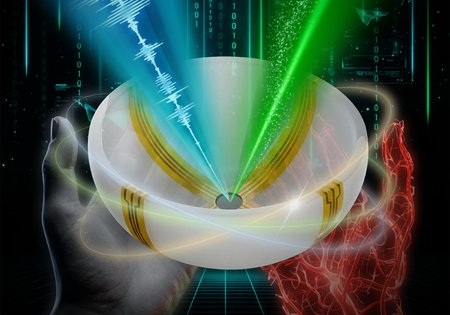
Using the hybrid platform, the researchers successfully imaged multiple regions of the human body, demonstrating that the method can capture both tissue morphology and vascular function in three dimensions. The system achieved imaging depths of up to about four centimeters and completed scans in under one minute. The findings, published in Nature Biomedical Engineering, showed that RUS-PAT addresses many limitations of existing clinical imaging tools while remaining feasible for human use.
RUS-PAT is designed for clinical scenarios where understanding both structure and physiology is critical. Potential applications include improved breast tumor imaging, where clinicians could assess tumor boundaries alongside blood flow and pathology, and monitoring nerve damage in diabetic neuropathy by visualizing oxygen supply together with tissue changes. The approach could also support brain imaging by enabling simultaneous observation of brain structure and hemodynamics. With options such as endoscopic light delivery, deeper tissues may become accessible, and ongoing translational work aims to refine the system for broader clinical deployment.
"The novel combination of acoustic and photoacoustic techniques addresses many of the key limitations of widely used medical-imaging techniques in current clinical practice, and, importantly, the feasibility for human application has been demonstrated here in multiple contexts," said Dr. Charles Y. Liu, an author of the paper.
Related Links:
CALTECH
University of Southern California