International Study Assesses AI for Prostate Cancer MRI Interpretation
Posted on 12 Jun 2026
Prostate cancer is a leading cause of cancer morbidity in men, and accurate early diagnosis hinges on expert interpretation of prostate magnetic resonance imaging (MRI). Rapid adoption of MRI-first pathways has strained services as radiology capacity lags demand. Missed or delayed readings can postpone definitive biopsy and treatment decisions. To help address this challenge, researchers have launched an international trial to test whether artificial intelligence (AI) can match expert radiologists in detecting clinically significant disease on MRI.
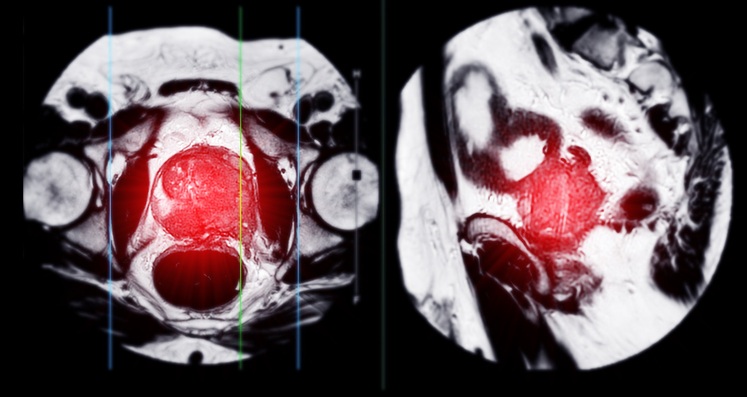
The University College London (UCL)-led study, called PARADIGM, is an international, prospective, multicenter, within-patient diagnostic trial that will enroll 500 men over 18 months. Each participant’s MRI will be interpreted independently by a radiologist and by an AI system trained to flag suspicious prostate lesions. Radiologists will initially be blinded to the AI output to enable a direct comparison, and any lesion identified by either reader will be targeted for biopsy. The primary outcome is detection of clinically significant prostate cancer, defined as Gleason Grade Group 2 or higher. The trial is designed to determine whether AI can meet growing demand for MRI interpretation without compromising diagnostic accuracy or patient safety.
This work follows the practice-changing UCL-led PROMIS and PRECISION trials, which established prostate MRI as the first standard test for men with suspected prostate cancer in the United Kingdom and in many parts of the world. MRI-first pathways have helped doctors avoid unnecessary invasive biopsies and detect clinically important disease earlier. However, prostate MRI interpretation requires specialist expertise and has a steep learning curve, with optimal performance typically achieved by experienced genitourinary radiologists. International projections also indicate a radiologist workforce shortfall of around 40% in the next few years, while global prostate cancer cases are expected to double over the next two decades. Recent research from the same group, the PRIME trial, reported that a faster and less costly MRI protocol performed as accurately as the current 30–40-minute scan, underscoring the need to expand imaging capacity alongside specialist interpretation.
If successful, AI could support radiologists, reduce variation in scan readings, speed diagnosis, and help address shortages in specialist expertise. Researchers also note potential use in expanded MRI-based screening programs, while emphasizing that rigorous trials such as PARADIGM are essential before routine clinical adoption.
“Prostate MRI has transformed how we diagnose prostate cancer, but access remains limited in many health care systems due to workforce and capacity constraints. PARADIGM is designed to test whether AI can match radiologists in detecting clinically significant cancers, using the highest level of clinical evidence,” said Dr. Alexander Ng, Ph.D. student leading the trial at the UCL Division of Surgery and Interventional Science.
“This study is not about replacing radiologists, but about understanding how AI might be safely integrated into clinical pathways. If AI can reliably detect aggressive prostate cancer, it could help standardize care, reduce delays, and improve access to diagnosis worldwide,” said Professor Veeru Kasivisvanathan, urological surgeon at University College London Hospitals and chief investigator at the UCL Division of Surgery and Interventional Science.
Related Links
University College London